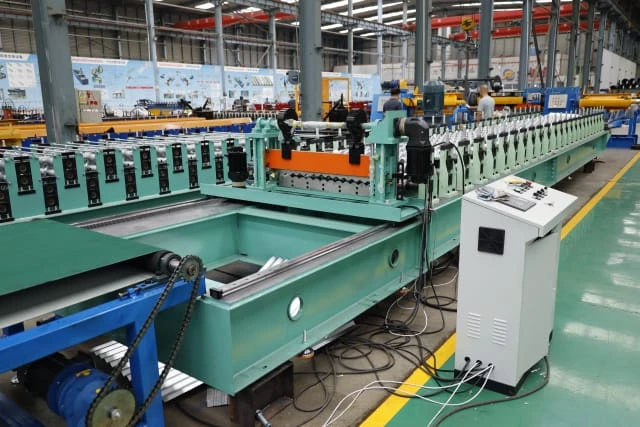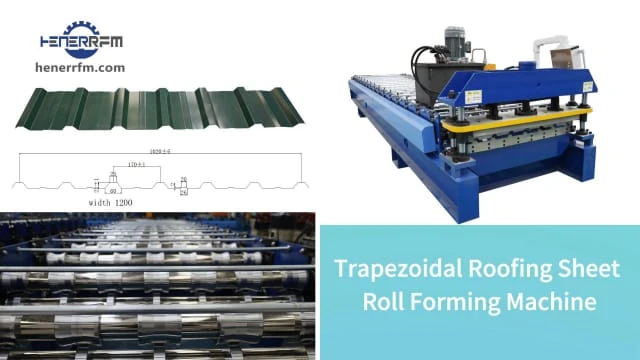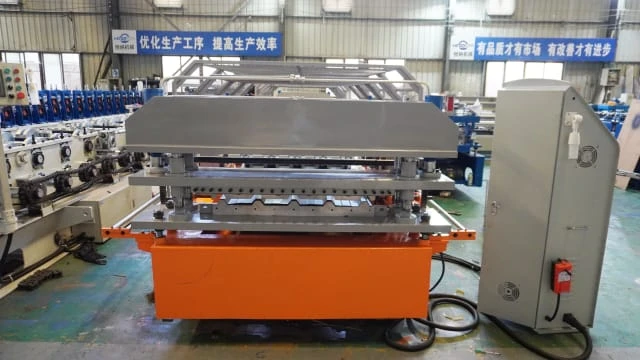





Highway guardrails are critical safety components designed to prevent vehicles from leaving roadways and to minimize accident severity. As infrastructure construction expands worldwide, demand for high-strength guardrail systems continues to grow. Establishing an efficient highway guardrail production line enables manufacturers to supply consistent and durable safety barrier products for transportation projects.
Modern highway guardrail manufacturing uses roll forming technology to produce guardrail profiles with precise dimensions and strong structural performance.
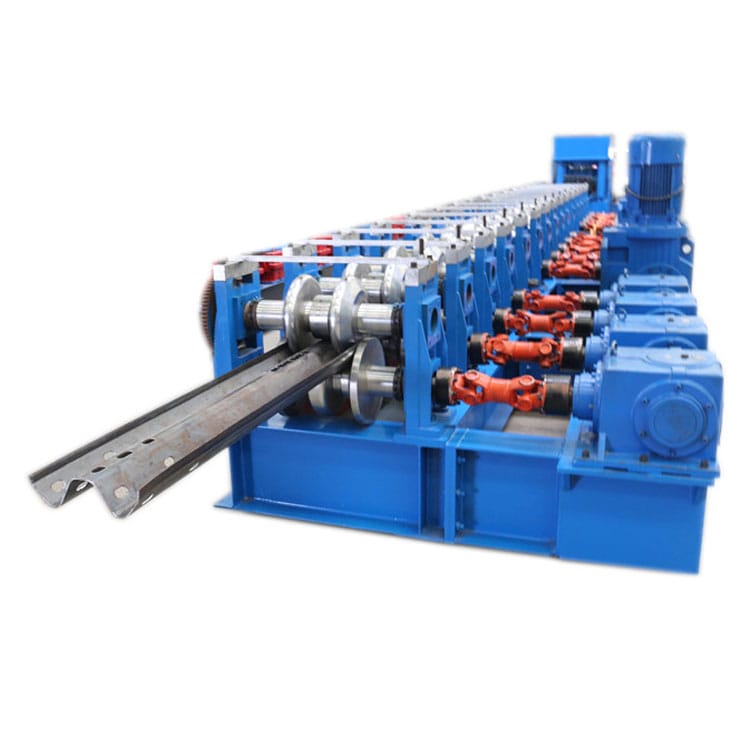
Guardrail Manufacturing Process
The highway guardrail production workflow generally includes the following stages:
- Steel coil feeding
- Profile roll forming
- Punching bolt holes
- Cutting to length
- Finished product stacking
Continuous roll forming ensures consistent profile shape and improves productivity in large-scale guardrail production.
Main Equipment Configuration
Heavy Duty Decoiler
Guardrail production requires handling thicker steel coils. Heavy duty decoilers provide stable material feeding and improve forming accuracy.
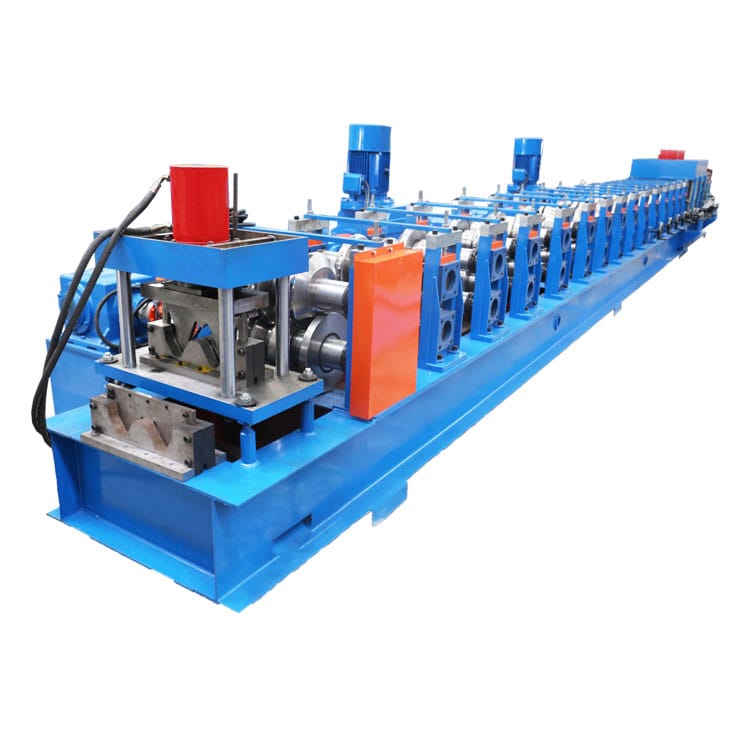
Guardrail Roll Forming Machine
Roll forming units gradually shape steel strips into guardrail profiles. High-strength roller materials ensure durability when forming thick steel sheets.
Punching And Slotting System
Guardrail panels require bolt holes for installation. Integrated punching systems maintain consistent hole positioning, improving installation efficiency on construction sites.
Hydraulic Cutting System
Hydraulic cutting devices guarantee accurate panel length and smooth cutting edges, ensuring product installation reliability.
Automatic Stacking Equipment
Stacking systems organize finished guardrail panels, improving production efficiency and reducing manual handling risk.
Types Of Highway Guardrails
Different guardrail profiles are used depending on road safety standards.
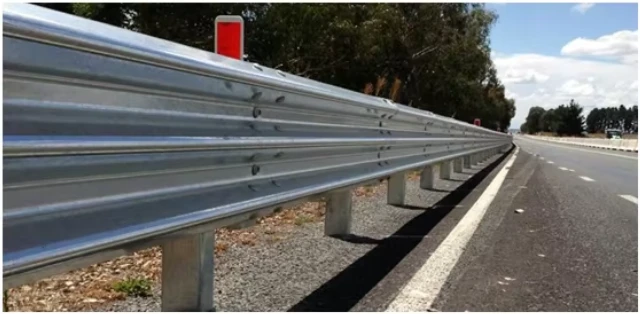
W Beam Guardrail
W beam guardrails are widely used in highways and expressways due to their energy absorption capability and reliable impact resistance.
Thrie Beam Guardrail
Thrie beam guardrails provide stronger protection and are often applied in high-risk road sections or bridge areas.
Advantages Of Automated Guardrail Production
Automated guardrail manufacturing provides multiple operational benefits:
- Consistent profile dimension accuracy
- Higher production efficiency
- Reduced labor cost
- Stable punching precision
- Improved product strength
Roll forming technology ensures uniform product quality, which is essential for safety-critical infrastructure projects.
Raw Material Requirements
Guardrails are usually manufactured using high-strength galvanized steel to ensure corrosion resistance and long service life in outdoor environments.
Production Capacity Considerations
Guardrail production lines can be customized based on project supply demands. Standard production speeds typically range from 12 to 18 meters per minute, depending on material thickness and profile design.
Selecting Suitable Guardrail Production Equipment
When choosing guardrail production equipment, manufacturers should evaluate:
- Material thickness range
- Required guardrail profile standards
- Production output planning
- Automation level requirements
- Transportation and installation standards
Conclusion
Highway guardrail production lines provide reliable manufacturing solutions for modern road safety infrastructure. With advanced roll forming technology and integrated punching systems, manufacturers can produce high-quality safety barriers that meet international engineering standards.
👉 Contact our technical team for customized guardrail production line solutions and quotation support.