In the U.S. construction market, metal roofing and wall panels are widely used in residential buildings, commercial facilities, industrial plants, agricultural structures, and prefabricated metal building projects. Different building types impose varying requirements on the appearance, cross-sectional profile, installation methods, and performance of metal panels, leading to the development of several representative panel profiles in the marketplace. From classic 5 V and Rib panels to the widely adopted R-Panel and PBR Panel, as well as corrugated metal panels available in various heights and spacing, these diverse profiles offer architects, designers, and metal fabricators a rich selection of products.
The American Metal Roofing Panel Roll Forming Machine is specialized equipment designed for manufacturing metal roofing and wall panels. For companies aiming to enter the U.S. metal building materials market, an American Metal Roofing Panel Roll Forming Machine serves as a critical piece of equipment for planning diversified production capabilities across roofing and wall panel products.
I. What are the common metal roof and wall panel profiles used in the U.S. market?
The U.S. metal building market offers a wide variety of panel profiles, which differ in rib height, corrugation shape, panel width, rib spacing, and connection structures. These structural characteristics not only affect the appearance of the panels but are also closely tied to their application scenarios, installation methods, and manufacturing processes.
From a structural perspective, common metal sheet profiles in the United States can be broadly categorized into two main types: ribbed metal sheets and corrugated metal sheets. Ribbed metal sheets typically feature prominent longitudinal stiffeners and are commonly used in roofing and wall systems. Corrugated metal sheets, on the other hand, form a distinctive cross-sectional appearance through continuous arched waves and can be utilized both for exterior building applications and as interior decorative or lining panels.
For metal sheet manufacturers, producing different profiles requires corresponding roller structures and forming passes. Even if two products appear similar, their rib height, rib spacing, panel width, and edge lap configurations may differ. Therefore, equipment cannot be selected based solely on product names; it must be designed according to actual cross-sectional drawings. This is precisely why considering product cross-sectional differences is a key factor when selecting an American Metal Roofing Panel Roll Forming Machine.
II. Ribbed Metal Panels: Commonly Used Ribbed Metal Sheets in the U.S. Market
Ribbed metal panels are a common product type in U.S. metal roofing and wall systems. These panels are typically fastened with exposed screws and feature longitudinal ribs of varying heights and spacing to form the panel cross-section. Depending on the building’s intended use and design requirements, options include low-rib, medium-to-high rib, or panels with specialized interlocking structures.
For manufacturers producing various ribbed metal panels, the roller configuration of an American metal roofing panel roll forming machine must be designed according to the rib height, rib spacing, and overlap method of the target profile. Below are representative ribbed panel types in the U.S. market.
1. 5 V Metal Roofing Panel
The 5 V Metal Roofing Panel is a classic looking metal roofing panel type. Its section consists of a number of lower V-shaped bars, the overall appearance is simple, often used in residential roofing, can also be used as an interior liner or decorative board.
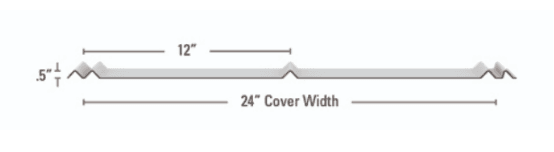
Based on the product descriptions referenced from the U.S. market, the 5V panel features a classic architectural appearance, with common reference products having a width of 24 inches. For manufacturers producing such panels, the equipment needs to determine the roller structure, reinforcing position and finished width based on the target cross section to ensure the appearance consistency of the panel and subsequent installation cooperation.
2. Max-Rib Panel
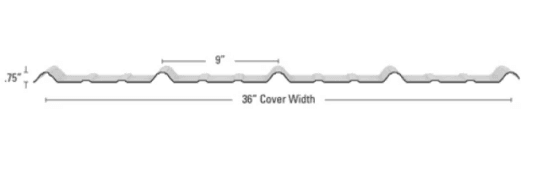
The Max-Rib Panel is a low reinforcement metal panel with a 3 / 4 inch height reference bar listed in the data for use in residential roofing and column-framed buildings. Compared to higher-strength panels, the low-strength design has a relatively simple appearance and is able to accommodate a variety of common building uses.
Max-Rib products also exist in different segments, such as Max-Rib Ultra, Max-Rib II, Max-Rib 100 and Commodity / Liner. Different versions may correspond to different performance, life expectancy, and budget requirements. Therefore, when planning a production line, manufacturers need to first define the cross-sectional drawings of the target version, rather than determining the equipment structure based on the Max-Rib name alone.
3. Mega-Rib Panel
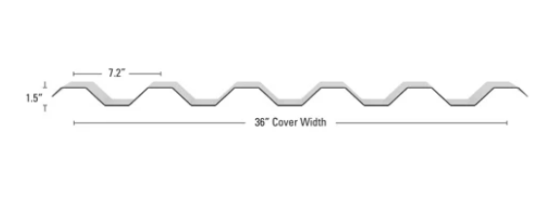
The Mega-Rib Panel, also commonly contrasted with the 7.2 Panel or TR 7.2 panel type, is a metal roof and wall panel with more pronounced longitudinal reinforcement. References describe it as having good strength and span capacity and suitable for industrial and commercial buildings.
The main characteristic of this type of plate is the more prominent reinforced structure. When installed horizontally, visible vertical bars can also create a physically expressive appearance. The production equipment needs to design the rollers according to specific girth height, girth spacing, plate width and edge structure so that the metal sheet reaches the target cross section after continuous forming.
4. R-Panel
The R-Panel is a versatile roof and wall panel profile commonly used in prefabricated metal buildings, particularly well-suited for prefabricated metal building projects. It is also used for some residential metal roofs, particularly in the Southwestern United States market.
An important feature of the R-Panel is that it is possible to choose a version with or without the PBR lap support structure according to the structural requirements. In general, panels with PBR structures are more used for roofing, while versions without PBR are also common for wall applications.
For the R-Panel Roll Forming Machine, the manufacturer needs to confirm whether the target product has the Purlin Bearing Leg, the sheet section size and the lap structure. The structural differences between different versions affect the wheel design and forming scheme of the equipment. Therefore, in configuration American Metal Roofing Panel Roll Forming Machine Specific differences between R-Panel and versions with PBR structures should be made clear.

5. PBR Panel
PBR Panel is the abbreviation of Purlin Bearing R Panel, which can be understood as R-shaped plate with purlin bearing structure. Compared with ordinary R-Panel, PBR Panel has a more obvious supporting structure in the lap area, so that the adjacent panels form a more full lap contact.
This structure helps to form a more robust plate connection and improves the storm resistance of the roof system. The PBR Panel can be mounted on a solid base or on an open frame such as a metal purlin or a wooden support structure.
Since the lapped edge structure of the PBR Panel is an important feature, the production equipment needs to focus on the forming relationship between the sheet edge, the supporting legs and the overall section. When selecting a PBR Panel Roll Forming Machine, the manufacturer should provide complete cross-sectional drawings to confirm the roll design of the equipment.
6. PBU Panel
PBU Panel is a metal roof and wall panel with exposed screws. According to the reference materials, the plate type can be installed directly on a coil or girdle, or it can be either vertical or horizontal depending on the building design.
The flexibility of the PBU Panel allows it to adapt to different architectural exterior designs. When producing such sheeting, the joint position, joining edges and sheet size need to be determined according to the actual cross section structure. For manufacturers who want to produce both roofing and wall panels, specifying the specific specifications of target PBU profiles is an important prerequisite for equipment selection.

7. Multi-Rib Panel
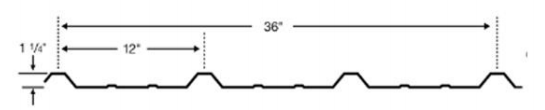
Multi-Rib Panel is a multi-purpose roof and wall panel, mainly used in prefabricated metal buildings. References describe it as having a similar product structure to the industry standard R-Panel, with its own rib design.
Multi-Rib can also be used for residential roofs, particularly in the Southwestern U.S. market. The reference structure mentioned in the data has a 1 / 4 inch main reinforcing band with a spacing of 12 inches. For this type of product, the equipment needs to design the rollers according to the height and spacing of the main reinforcing and ensure the cross-section consistency of the plate during continuous production.

8. U-Panel
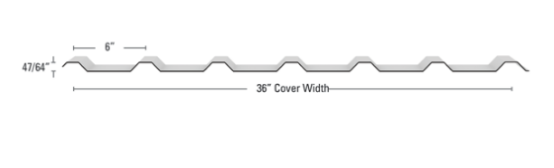
U-Panel is an exposed screw-fixed metal plate with a lower rib structure, which can be used on roofs and walls. The typical structure given in the reference materials is about 3 / 4 inches high with a gap of 6 inches between the bars.
Compared to R-Panel or Multi-Rib, U-Panel has a relatively flat appearance and is often used in scenes such as interior liners and partition walls. Due to their characteristic strain and spacing, the equipment needs to be specifically designed around the target cross section to ensure the overall shape and size of the plate.
9. Rugged Rib, Modern-Rib, Regal Rib and Other Rib Types
In addition to the common profiles mentioned above, the U.S. market also features various ribbed metal panels with distinct appearances and structural characteristics, such as Rugged Rib, Modern-Rib, Regal Rib, Retro-R, MESA, Ameri-Drain, Perma-Clad, AG Panel, Tuff-Rib, Imperial Rib and G-Rib, among others.
The specific cross section and name of these products may vary depending on the manufacturer or product line. For example, Modern-Rib combines the economics of an exposed screw plate type with a more visible appearance of the main rib; Rugged Rib emphasizes the applicability of reinforced panels in different construction projects.
For manufacturers looking to expand their product offerings in the U.S. market, these panel types offer additional directions for product development. However, at the equipment design stage, the height, spacing, plate width, joining edges and material requirements should still be confirmed based on the actual product drawings, rather than determining the equipment configuration based solely on the commercial name on the market.
III. Corrugated Metal Panels:Common corrugated metal sheets in the US market
Corrugated metal panels represent another distinctive category of building materials in the U.S. metal construction market. Different from Ribbed Panels with obvious longitudinal main ribs, corrugated panels usually adopt continuous arc or circular corrugated structure to form regular undulating surfaces.
Depending on the height, range and cross-sectional shape of the rebar, rebar panels can give a classic, traditional or modern architectural look and are used in different scenarios such as roofs, walls and interior decoration. For manufacturers planning to expand their corrugated panel product range, the American Metal Roofing Panel Roll Forming Machine corresponding forming rollers need to be configured according to the different corrugated crossings.
1. 2.5 “Corrugated Metal Panel
2.5 “Corrugated is the medium height corrugated sheet type described in Resources and one of the more popular corrugated sheet specifications listed therein. The plate type has a more distinctive corrugated structure, which can be used for roof and wall applications and adapts to a variety of building exterior designs.
The production equipment needs to determine the roller design according to the actual peak height, wave distance, plate width and edge structure. For manufacturers looking to mass produce 2.5 “Corrugated Metal Panels, stable corrugated forming and sheet size consistency are important considerations in product line design.
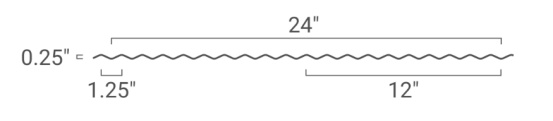
2. 1.25 “Corrugated Metal Roofing Panel
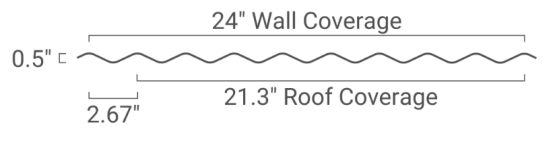
The 1.25 “Corrugated Metal Roofing Panel is a relatively low corrugated metal panel type. Compared to higher corrugated panels, its overall appearance is more delicate and suitable for roofing products with specific design requirements.
During the production process, the equipment needs to determine the forming wheel structure according to the height and spacing of the ripples, and formulate a corresponding forming plan in conjunction with the plate width and material specifications.
3. 7/8 “Corrugated Metal Panel
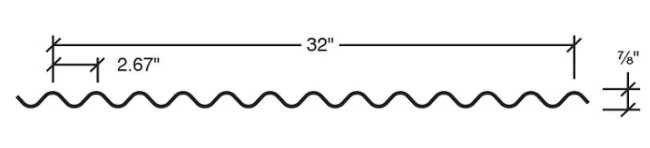
7 / 8 “Corrugated is another common corrugated sheet type. It has a relatively compact corrugated structure and can be used as an option in a range of metal roof and wall panel products.
Due to differences in height, spacing and cross-sectional arc between different corrugated panel types, 7 / 8 “corrugated production equipment also needs to be designed according to specific product drawings and cannot simply use the same forming rollers as 1.2″or 2.5″corrugated panels.

4. Multi-Cor, M-Cor and PBC Panel
Multi-Cor and M-Cor are metal plates with continuous arc corrugated structure. References indicate that such products can be used for roofs, walls and interior decoration boards, and can give a more classic ripple appearance.
The two plate types have similarities in the overall design, but the M-Cor ‘s rib height and structure are relatively softer. The PBC Panel is another type of corrugated roof and wall panel with exposed screws, and the reference specifically mentions its application in horizontal wall installation.
For this type of product, the device needs to be designed around the specific size of the corrugated cross section, the edges of the plate and the installation requirements. Different corrugated heights and shapes directly affect the forming wheel structure, so it is recommended to provide corresponding cross sectional drawings before determining the equipment scheme.
IV. Application of Different American Market Plate Types and Equipment Selection
Different metal panel profiles have overlapping application ranges, yet their structural characteristics and building uses are not entirely identical. For manufacturers of metal roofing and wall panels, product planning should be aligned with target customer segments, building types, and local market demands. When planning production capacity for American metal roofing panel roll forming machines, companies should also consider the specific customer groups associated with each panel profile as well as actual order requirements.
In the residential construction sector, 5 V Panels, Max-Rib, some R-Panels, and Corrugated Metal Panels can serve as product options offering diverse aesthetics and structural configurations. Manufacturers can tailor their production capabilities to specific panel types based on residential roofing designs, product positioning, and client budget planning.
In the fields of commercial buildings and industrial plants, panel types such as R-Panel, PBR Panel, Mega-Rib, Multi-Rib, and PBU Panel have numerous applications. Such buildings typically require the integration of prefabricated metal building structures, roof support methods, and wall designs to select appropriate metal panels.
In the fields of agricultural construction and column-based frame structures, Max-Rib, R-Panel, Mega-Rib, and other exposed screw-fastened panel types can also be selected based on specific project requirements. For companies that need to balance both roof and wall production, a product series with different rib types and panel widths helps expand the range of available products.
In addition, Corrugated Metal Panels are also suitable for various roofing, wall, and interior decoration scenarios. Their corrugation height and shape can provide different visual effects to buildings, making them of certain value in product development and production planning.
Conclusion: Planning a metal sheet production line based on target board specifications for the U.S. market.
The U.S. metal building market offers a wide range of representative roof and wall panel profiles. From ribbed panels such as 5 V, Max-Rib, R-Panel, and PBR to corrugated panels including 2.5″ Corrugated, 1.25″ Corrugated, 7/8″ Corrugated, as well as Multi-Cor and M-Cor, these diverse products meet the varied needs of residential, commercial, industrial, and agricultural construction.
For metal sheet manufacturers planning to enter or expand into the U.S. market, understanding locally common sheet profiles and their structural characteristics is essential for planning product lines and selecting appropriate production equipment.
HENER can provide tailored equipment solutions for American metal roofing panel roll forming machines based on customers’ product drawings, material specifications, target production volumes, and production schedules. If you are seeking roll forming machine suitable for popular metal roof or wall panel profiles in the U.S. market, please share your specific profile designs and technical requirements with HENER to facilitate further discussion on equipment configuration.