


×










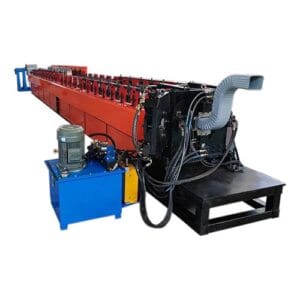
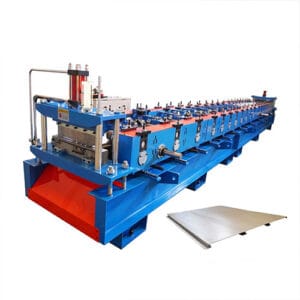
La máquina perfiladora de paneles Soffit es un sistema de producción especialmente diseñado para fabricar paneles de plafón de alta precisión utilizados en la ventilación de techos y el acabado de paredes externas. Ofrece un control de conformado estable y consistente panel geometría y calidad de superficie limpia, lo que lo hace adecuado para viviendas residenciales, edificios comerciales y sistemas de fachadas modernos.
Diseñado con un marco duradero y herramientas de rodillos avanzadas, este equipo ofrece un conformado suave y preciso a velocidades continuas. Sus funciones automatizadas de alimentación, guiado y corte reducen la intervención manual, lo que ayuda a los fabricantes a mantener una alta producción y a garantizar una calidad de producto confiable.
Con su combinación de eficiencia, precisión y rendimiento a largo plazo, la máquina perfiladora de paneles de plafón proporciona una solución ideal para las fábricas que buscan expandir la producción de paneles de plafón y satisfacer la creciente demanda de materiales de construcción duraderos y estéticamente agradables.


| Parámetro | Detalles |
|---|---|
| Tipo de máquina | Máquina formadora de paneles de sofito |
| Espesor del material | 0,4 mm – 1,2 mm |
| Ancho del material | 200 mm – 600 mm |
| Velocidad de formación | 15 – 25 m/min |
| Sistema de control | PLC con pantalla táctil |
| Sistema de accionamiento | Hidráulico/Eléctrico |
| Método de corte | Corte hidráulico o servo |
| Fuente de alimentación | 380 V, 50 Hz, trifásico |
| Material del rodillo | Acero de alta calidad (Cr12) |
| Tratamiento de recubrimiento | Cromado duro |

El Máquina formadora de paneles de sofito uses a series of roller stations to gradually transform flat metal coil into a finished soffit panel. Each station performs a specific forming operation, allowing the material to reach the required cross-sectional shape without relying on a single forming step.
The typical production process includes the following stages:
The complete line can be configured according to the customer’s production process, panel design, and automation requirements.
Precision-designed roller stations gradually shape flat metal coils into the required soffit panel profile. This progressive forming process helps maintain consistent panel dimensions and uniform bends throughout production, supporting reliable installation and a professional finished appearance.
A durable steel frame provides the structural support required for continuous forming operations. Combined with properly aligned rollers and a stable transmission system, the machine is designed to support dependable operation and consistent forming performance.
The material feeding, profile forming, and cutting functions can be integrated into a coordinated production line. Depending on the selected configuration, hydraulic or servo cutting can be used to produce panels at preset lengths, reducing repetitive manual operations and improving production workflow.
Different construction projects may require different soffit panel widths, rib patterns, edge shapes, and surface designs. The Máquina formadora de paneles de sofito can be designed around customer-provided drawings or approved profile samples, subject to material and tooling requirements.
High-quality roller tooling helps reduce unnecessary surface marking during forming when the equipment is correctly adjusted and operated. Hard chrome-plated rollers can be specified to improve surface durability and wear resistance, depending on the production requirements.
The continuous roll forming process allows manufacturers to produce multiple panels with consistent profiles and repeatable dimensions. With suitable feeding, cutting, and material handling arrangements, the production line can help improve manufacturing efficiency and support larger order volumes.
Soffit panels are widely used in building projects where the underside of roof overhangs or other architectural structures requires a durable and neat finish.
Residential Buildings
Metal soffit panels are used beneath roof eaves and overhangs in houses, villas, and residential developments. Depending on the panel design, perforated profiles can support ventilation requirements, while solid profiles can provide a clean, uniform finish.
Commercial and Industrial Buildings
Commercial buildings, warehouses, workshops, and other industrial facilities may use metal soffit panels as part of their exterior finishing systems. Consistent panel dimensions help support an orderly installation process across larger building areas.
Roof Eaves and Ventilation Systems
Soffit panels are frequently incorporated into roof eave systems. Where ventilation is required, suitably designed perforated panels can help facilitate airflow through the soffit assembly when used with an appropriate building ventilation design.
Architectural and Exterior Finishing
Different panel profiles and surface finishes allow soffit products to complement various architectural styles. Manufacturers can select suitable materials and coatings according to the intended application, environmental conditions, and design requirements.

Every soffit panel manufacturer may have different requirements for panel dimensions, profile geometry, raw materials, and production volume. HENER provides roll forming equipment solutions based on the customer’s product drawings and manufacturing objectives.
Before confirming a machine configuration, the following details should be evaluated:
Providing a detailed profile drawing and material specifications helps the engineering team evaluate the appropriate roller tooling, forming stations, and cutting system.