




Keel is a kind of building material used to support the shape and fix the structure, and it is very common used. The keel of the house takes on the role of dispersing the load-bearing pressure of the house, maintaining the structural balance of the house, and meeting the functional requirements of the house through different construction methods and strength requirements. Currently, the two most widely adopted solutions in the market are the light steel keel and the traditional wooden keel.
What is Light Steel Keel?What is Wooden Keel?
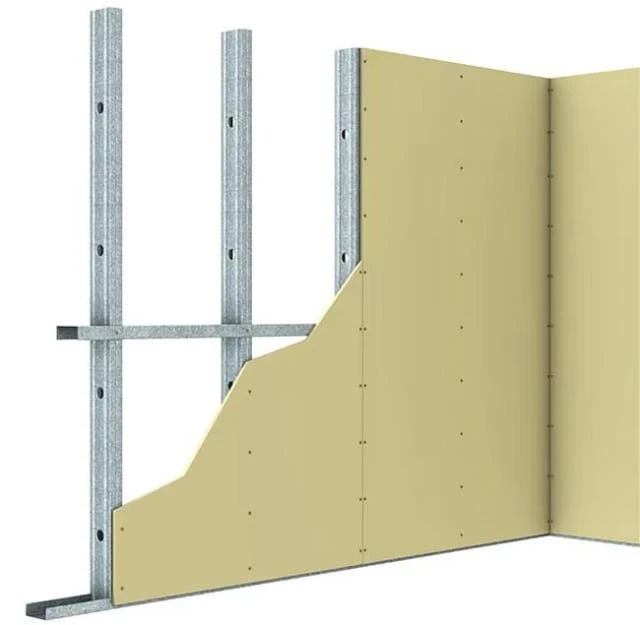
Light steel keel is essentially a building structural frame component made from galvanized steel through roll forming. It is characterized by standardized, high-precision, and industrialized production, with common productions including C-stud and U-track. It is widely used in modern construction, such as partition walls, ceilings, and prefabricated building structures like light steel villas.Light steel keel has significant advantages in fire resistance,corrosion resistance and service life, making it an increasingly important basic material in the development of construction.
Wooden keel is a structural support framework for building foundations, made from natural wood through processes such as cutting, polishing, and drying. It is a traditional structural material for interior decoration projects. It is typically made from lightweight woods such as pine and fir, and usually consists of square or rectangular strips. In construction, it is mainly used for traditional interior decoration.
How About Light Steel Keel or Wooden Keel
So, when both are used for building support structures, what are the key differences between light steel keel and traditional wooden keel?
1.Material Performance Comparison
| Light Steel Keel | Traditional Wooden Keel |
| · Light(30% lighter than wood keel) | · Heavy |
| · Deformation resistance and crack resistance | · Prone to deformation, warping and cracking due to temperature and humidity changes |
| · No thermal expansion or contraction issues, long-term dimensional stability | · Poor dimensional stability,uncontrollable processing errors |
| · High-precision manufacturing enables the seams tighter, effectively reducing post-construction issues such as water leakage and abnormal noise |
2.Construction Efficiency Comparison
| Light Steel Keel | Traditional Wooden Keel |
| · No complicated cutting or processing required | · Highly dependent on skilled carpenters |
| · Fast construction speed | · Long construction period with low efficiency |
| · Not affected by the weather, suitable for year-round construction | · Prone to construction delays caused by rainy seasons, low temperatures and other weather conditions |
3.Cost Structure Comparison
| Light Steel Keel | Traditional Wooden Keel |
| · Higher initial costs | · Lower initial costs |
| · High material utilization rate | · High material waste |
| · Service life of over 30 years | · Typical service life of 5–10 years |
| · Lower long-term cost | · High long-term maintenance cost |
How to Choose the Light Steel Keel
· Select by application
Ceilings: Choose T-studs or C-studs for high strength and easy installation.
Partition walls: Choose C-studs paired with U-tracks for sturdiness, durability, sound insulation and fire resistance.
Load-bearing walls: Choose high-strength C-studs used with fire-resistant materials.
· Select the appropriate thickness (0.5–1.2mm)
Standard interior partition walls: 0.5–0.8mm
High-rise buildings, exterior walls: 1.0–1.2mm
· Check the galvanized coating thickness (≥80g/m²)
A thicker galvanized coating delivers better corrosion resistance and higher durability.
· Brand and certification
Choose products that comply with the GB/T 11981-2008 standard.
Welcome To Choose HENER
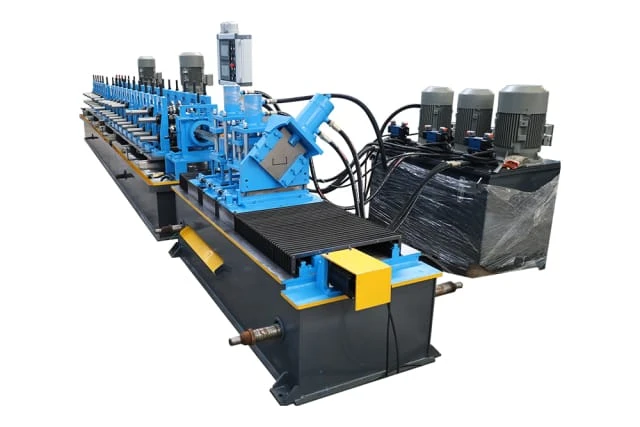
If you want to produce the light steel keel,HENER Machinery will provides a complete production line for high performance steel framing solutions.Our light steel keel roll forming machines range includes studs and tracks roll forming machines,furring channel roll forming machines and ceiling channel roll forming machines.
The light steel keel roll forming machines are an essential part of the construction industry. They are used to create lightweight, strong, and durable metal frames that are used in ceiling systems, partition walls, and other construction projects. These machines use a process called roll forming to shape metal into the desired shape and size.
The process of roll forming involves feeding a strip of metal through a series of rollers that gradually bend and shape the metal into the desired shape. The metal is then cut to the desired length and can be used in construction projects.Our light steel keel roll forming machines are designed to handle a variety of metals, including steel, aluminum, and copper.
Working Principle of Roll Forming
· Decoiling – Sheet coil loaded onto a decoiler
· Feeding – Strip fed into the roll forming station
· Forming – Final shaping by roller
· Post-forming – Additional features if needed
· Cutting – Cut to length by built-in cutter
Additional Features:
· Punching – Holes for connections etc.
· Embossing – Brand name, logo imprinting
· Coatings – Powder coating, galvanizing
As a professional manufacturer deeply engaged in the roll forming machine industry, HENER Machinery’s machines are tailor-made for large-scale, high-quality production for building material manufacturers worldwide.Our light steel keel roll forming machines recognized worldwide for their reliability, precision, and efficiency. We welcome global customers to partner with us .