As demand for metal panels continues to grow for industrial plants, storage facilities, commercial buildings, and residential construction, overseas building materials manufacturers are rethinking a seemingly simple question that directly affects production efficiency: how to produce more types of panels in limited plant space.
For steel structure factories and metal roof panel producers, the market demand is no longer limited to a single specification. Different construction projects may require different trapezoidal roof panel types, and customers are increasingly focused on delivery cycles, production flexibility, and return on investment in equipment.
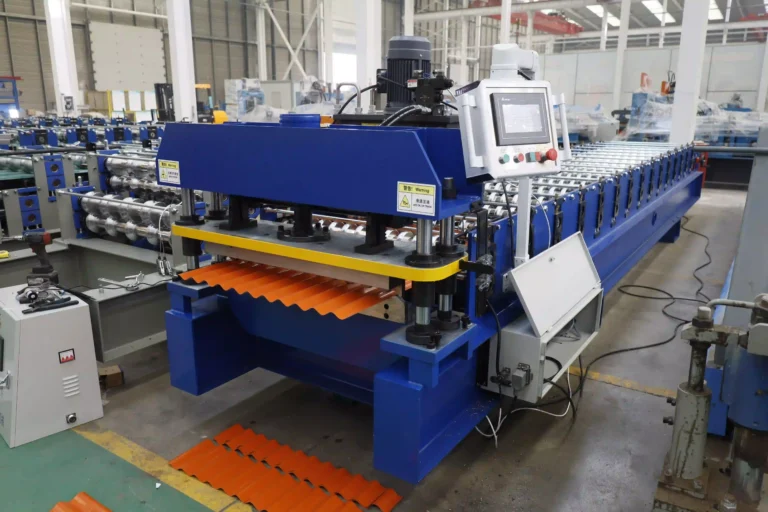
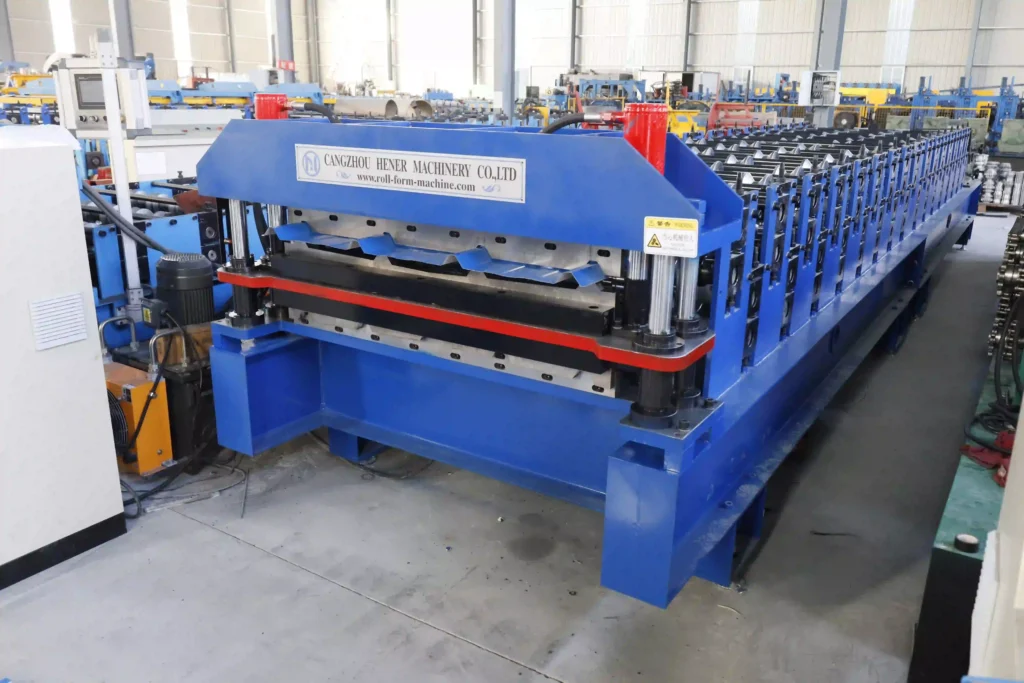
In such a market environment, TR4 And TR5 Double Layer Roll Forming Machine has gradually become a noteworthy production program. Compared to the traditional way of having to deploy two production lines separately, the dual-layer structure can integrate two forming systems into the same equipment, providing manufacturers with more flexible panel production capabilities while reducing equipment footprint. The current double layer roll forming machine in the industry generally uses separate upper and lower forming layers to produce two different metal roofing profiles.
The Overseas Roof Panel Market Is Needing More Production Flexibility
In recent years, the application of metal roof panels in industrial plants, logistics warehouses, commercial buildings and residential projects has continued to expand. Different regions and different projects have different requirements for the structural form, appearance and size of roof panels.
TR4 and TR5 are common trapezoidal roof panels, which are of particular interest in some Latin American markets. Public industry information also shows that TR4 / TR5 double layer roll forming machine is widely used in metal roofing sheet production, especially for the need for stable production of trapezoidal sheet manufacturing enterprises.
For building materials manufacturers, the real question is not “whether to produce one roof panel,” but whether the factory can quickly adjust production arrangements when customers need multiple specifications at the same time.
If each plate type corresponds to a separate production equipment, the plant area, equipment procurement, and subsequent maintenance will increase. This production model may not be ideal for small and medium-sized steel structure factories or overseas manufacturers that are expanding their product lines.
This is also one of the important reasons why double layer roll forming machine is attracting attention.

Why is dual-layer construction suitable for multi-spec roof panel production?
The traditional roofing sheet roll forming machine is usually designed around a main sheet type, and the double layer roll forming machine is the integration of two sets of forming systems in a device frame.
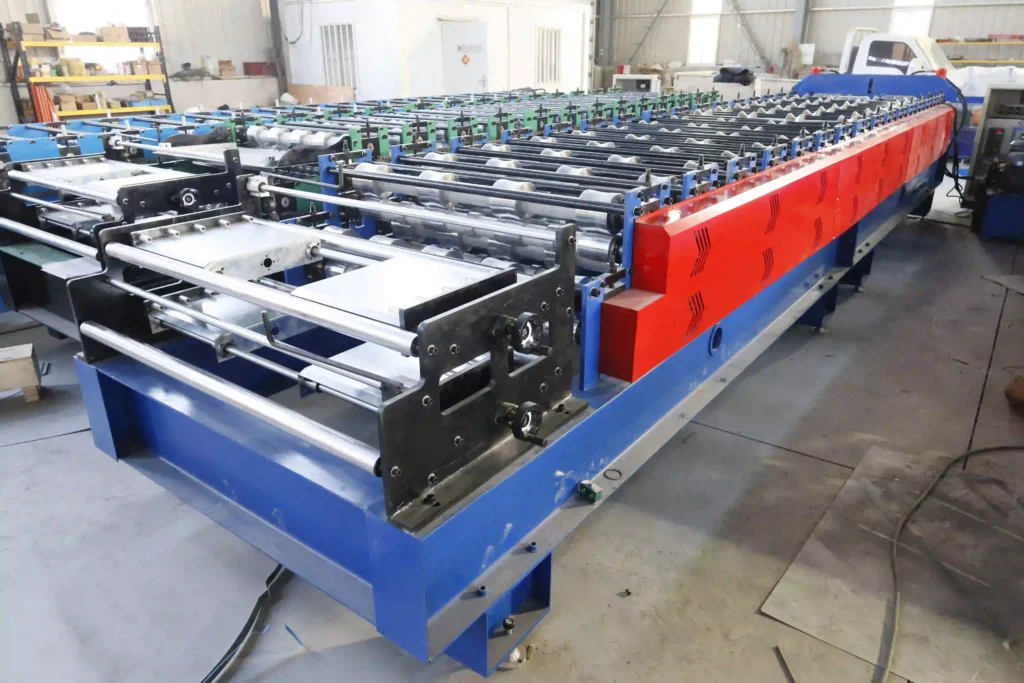
This design is not simply to put two machines on top of each other. A reasonable dual-layer structure needs to consider the spatial layout between the up and down forming systems, feed path, transmission, and operational convenience so that different plate types can be processed in the same production area.
For companies producing TR4 and TR5 roofing panels, a practical value of this structure is to reduce plant occupancy while retaining multi-panel production capacity.
The TR4 / TR5 double layer roll forming machine on the open market usually have two separate forming structures, and the production process is managed by a control system. The designs of different manufacturers will vary, but the core idea is basically the same: to meet the production needs of both panel types through a compact equipment layout.
The factory space is not infinite. In addition to the roll forming machine itself, space needs to be reserved for raw materials, finished products, packaging, forklift access and other work equipment. Therefore, the rational use of production areas is sometimes as important as the speed of equipment.
How can TR4 and TR5 production help roofing panel manufacturers expand their product range?
For overseas panel suppliers, customer demand often comes from different types of construction projects.
Industrial plants pay more attention to the practicality and construction efficiency of roofing systems; Storage projects require a steady supply of high volume plates; Commercial buildings may be more concerned with the paneled look and overall building effect. The difference in demand created by different projects makes the manufacturer need to have a certain product adjustment capability.
TR4 And TR5 Double Layer Roll Forming Machine The value is that it enables production planning around two target panels, eliminating the need for companies to immediately deploy a complete new production line to add one product.
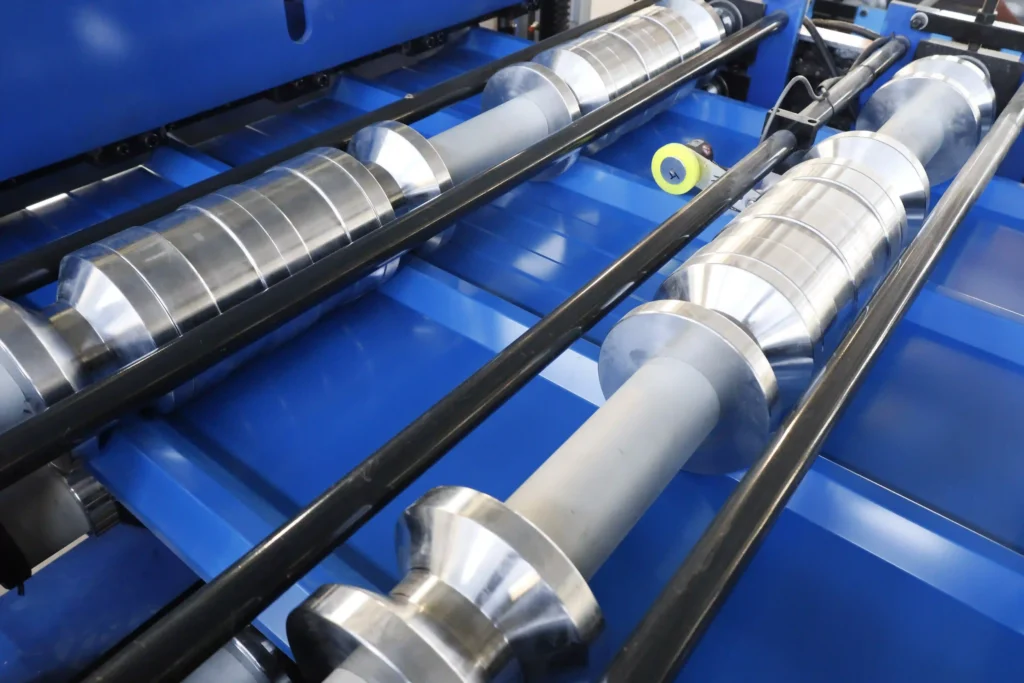
At the same time, a stable roll forming process is also very important. For trapezoidal roof panels, from the time the steel roll enters the equipment to the time the final segment is formed through multiple forming processes, a reasonable forming order and a stable roller combination need to be maintained, otherwise problems such as plate waves, surface scratches or unstable segment sizes may occur. Relevant industry data also mentioned that some TR4 / TR5 profiles have higher requirements for roller design and forming process due to the height of the section and forming characteristics.
Therefore, for a factory that really produces roof panels for a long time, the value of a device lies not only in “the ability to produce two panel types,” but also in its ability to maintain a stable production state during long-term operation.
HENER Machinery TR4 And TR5 Double Layer Roll Forming Machine for Actual Factory Needs
For overseas steel structure factories, roofing panel manufacturers and building materials suppliers, the TR4 and TR5 Double Layer Roll Forming Machine is only a part of the overall production project.
More importantly, whether the equipment can be reasonably designed according to the plate type requirements of the local market, raw material conditions and factory production methods.
HENER Machinery long-term focus on roll forming machine manufacturing, its products cover the roofing sheet roll forming machine, purlin roll forming machine, solar mounting roll forming machine and other metal profiles production equipment. For the production needs of TR4 and TR5 roofing panels, HENER Machinery can design equipment according to the sheet drawings and production requirements provided by customers, rather than simply providing standardized equipment.
In actual projects, Henderson also attaches greater importance to the complete process of equipment from manufacturing to input production, including technical communication before production, equipment testing, installation and commissioning, and operation training. This is especially important for overseas customers, because the smooth operation of a roll forming production line is often determined by the matching of equipment design and actual production conditions.
For manufacturers looking to expand their roof panel product range, optimize their plant space utilization, or face demand from both the TR4 and TR5 markets, dual-layer production offers an alternative approach to equipment planning.
Conclusion
The metal construction industry is moving towards a more flexible, efficient and multi-specification production model. For roof panel manufacturers, future competition depends not only on the production of a single product, but also on the ability of factories to adapt quickly to different projects and different market needs.
TR4 And TR5 Double Layer Roll Forming Machine by centralizing the production capacity of both roof panels in a more compact equipment layout, the dual-layer forming structure provides overseas building materials manufacturers with a production solution that takes into account product diversity and plant utilization.
As metal roofing systems continue to be used in industrial plants, storage buildings, commercial projects and residential construction, such more flexible roll forming machine will also continue to be a worthy choice for overseas roofing panel producers when upgrading equipment and planning production lines.