
In the U.S. metal building market, R-panel and PBR-panel are common metal sheet profiles used in prefabricated steel structures, widely applied in industrial facilities, warehouses, commercial buildings, and some residential projects. For metal roof panel manufacturers, steel structure contractors, and building material purchasers, understanding the differences between PBR panel vs R panel helps in selecting the appropriate profile based on structural requirements and installation specifications.
From an appearance standpoint, PBR panels and R panels typically feature similar trapezoidal rib structures. The key difference worth noting lies in the side-lap area: PBR panels incorporate purlin bearing legs, which provide additional support at the lap location. This design makes PBR panels generally more suitable for roof applications, while R panels without bearing legs are more commonly used in wall systems.
As the U.S. metal building market demands greater panel profile diversity and production efficiency, the comparison between PBR panel vs R panel has become not only a common topic in building material procurement but also a key consideration for metal roof panel manufacturers when planning roll forming production lines. Understanding the structural relationship between these two panel types enables companies to more effectively plan their product portfolios and select roll forming machine that aligns with their target profiles.
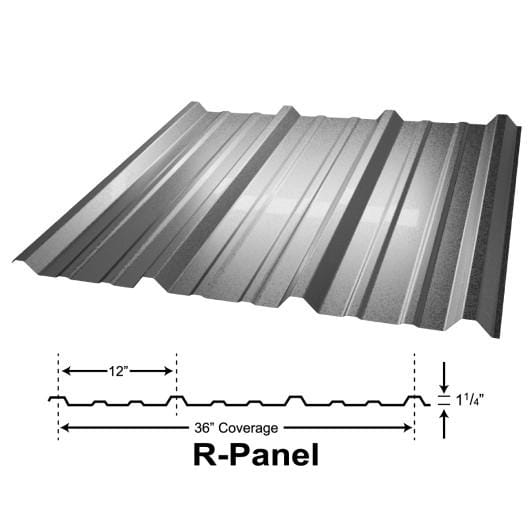
I. What is an R Panel? Understanding the Structure and Applications of R Panels
The R Panel is a versatile metal roofing and wall panel primarily used in prefabricated metal building systems. Its typical feature is the trapezoidal ribbed cross-section, which includes prominent longitudinal reinforcement ribs, enabling it to meet various building envelope requirements.
Based on specific product design, R Panel can be used for wall applications in industrial buildings, warehouses, and commercial facilities, as well as for certain metal roofing projects. In the southwestern United States, R Panel is also a common choice for residential metal roofing.
It is important to note that the R Panel is not limited to a single fixed structure. According to U.S. standing seam panel data, the R Panel is available in versions with or without purlin support purlins. Designs incorporating support purlins are typically referred to as PBR Panels, whereas the version without this feature is more commonly used for wall applications.
For purchasers, determining whether the R Panel is suitable for a specific project cannot rely solely on the appearance of the trapezoidal ribs on the front surface of the panel. It is also necessary to verify the side overlap structure, installation methods, and the manufacturer’s technical documents.
For manufacturing enterprises, the cross-sectional design of the R Panel determines the roller configuration and forming processes. The production line must be designed based on the rib height, rib spacing, panel width, and edge structure of the target panel type to ensure that the finished product meets actual installation requirements.
II. What is a PBR Panel? Why is Support Purlin Design Important?
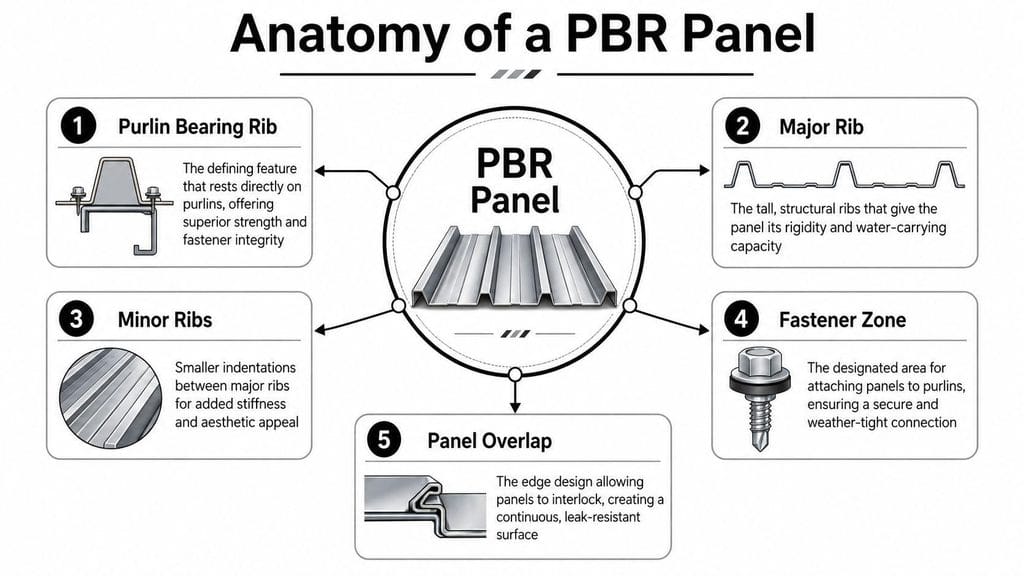
PBR Panel is an abbreviation for Purlin Bearing R Panel, which refers to an R-shaped panel with a purlin-bearing structure. It shares a similar ribbed profile with common R Panels but features additional support structures in the side lap area.
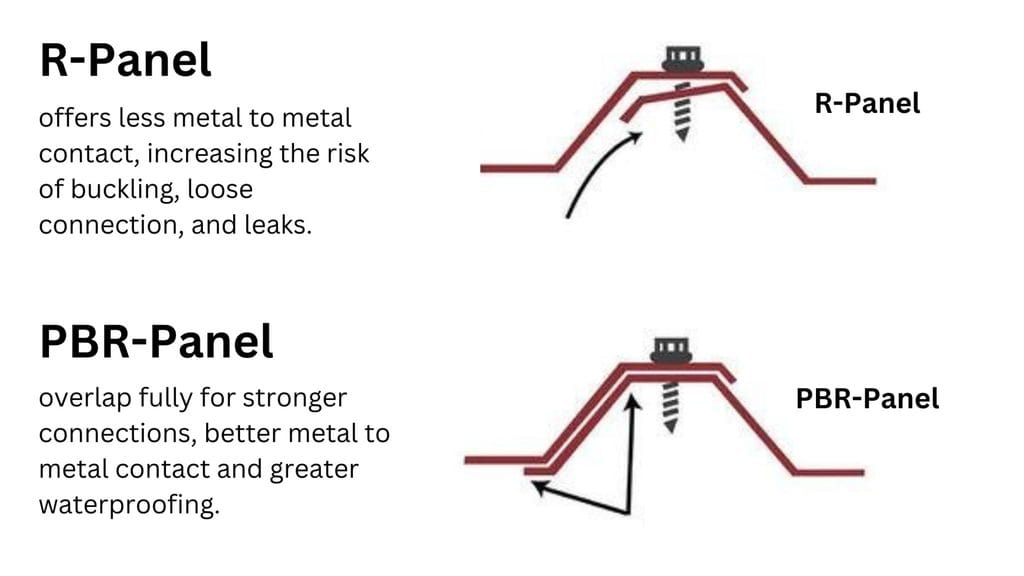
During the roof installation process, the support purlins of the PBR Panel can provide support at the overlapping positions. The overlapping area typically features more substantial overlap and metal contact, which helps form a more secure connection and improves the seam’s resistance to wind and rain. The specific effect still depends on the panel design, sealing materials, fastener arrangement, and installation quality.
The structural characteristics of the PBR Panel make it practically valuable in roofing systems. Installers need to position and secure adjacent panels according to specified overlapping methods, while support legs can help provide additional support at the overlapping areas.
In addition, PBR panels can be installed on solid substrates according to specific product designs, or on open frameworks such as metal purlins or wooden support beams. However, the actual installation method must comply with the manufacturer’s installation instructions and project requirements.
For metal sheet manufacturers, PBR Panels are not just another name for ordinary trapezoidal panels. Their support purlins and overlapping edges require specialized cross-sectional designs, so when planning a PBR Panel Roll Forming Machine, it is essential to confirm whether the rollers can accurately form these critical structures.
III. PBR Panel vs. R Panel: What are the main differences?
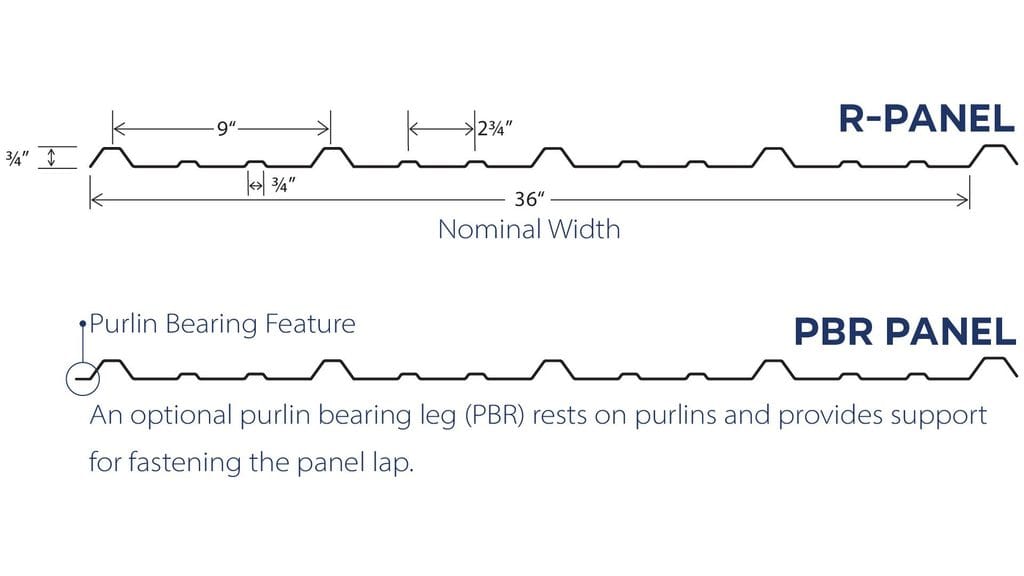
To understand PBR Panel vs R Panel, it is first important to clarify that they are not entirely independent or unrelated types of panels. The PBR Panel can be regarded as an R Panel structure with rafter-supported purlins, whereas a standard R Panel may not include this design feature.
The main differences between the two can be understood from the following aspects.
First, the side structures differ. The PBR Panel is equipped with purlin-supported, providing additional support to the overlapping areas of adjacent panels; the R Panel without this structure adopts a corresponding conventional edge design. The specific cross-sections should still be based on the drawings provided by the manufacturer.
Second, there are differences in typical applications. The PBR Panel is typically used for roofing because installers can utilize support legs to improve the support conditions at the overlapping locations. The R Panel without PBR support purlins is more commonly used for wall cladding, but some R Panel products can also be used for roofing, provided that their design and installation conditions are suitable for the corresponding application.
Third, installation and waterproofing requirements must be evaluated in conjunction with the specific system. The overlapping design of the PBR Panel helps improve the connection and protection performance at joints, but it cannot replace proper fastening, sealing, and drainage design. Roof slope, wind load, substrate conditions, and construction quality all affect the overall performance of the roofing system.
From a procurement perspective, the choice between PBR panel vs R panel should be based on architectural applications and installation requirements, rather than simply assuming that one type is superior in all situations. For enterprises that need to produce both types of panels, it is also necessary to confirm in advance whether different cross-sections can be processed on the same production line, and whether roller replacement or adjustments to relevant tooling are required during model changes.
IV : Choose the Right Panel Profile and Forming Solution
When comparing PBR Panel vs R Panel, it is crucial to understand their structural relationships. PBR Panels feature supported purlins, which provide additional support at overlapping sections, making them typically used for roofing applications. In contrast, R Panels without this structure are more commonly used for wall applications, though specific uses still depend on product design and manufacturer technical requirements.
For metal roof panel manufacturers, clearly understanding the cross-section, overlapping structure, and installation methods of the target panel type is the first step in selecting appropriate production equipment. If you are looking for a PBR Panel Roll Forming Machine suitable for PBR Panel production, please contact HENER Machinery. Provide the panel design drawings, material specifications, and production requirements. HENER can discuss the corresponding roll forming machine configuration based on specific projects, offering equipment support to overseas metal building material manufacturers and steel structure processing enterprises.