
Introduction
With the development of modern commercial, industrial, and agricultural buildings, metal roofing has gradually become an important component of the building envelope system. In response to the increasing demands for durability, consistency in panel dimensions, and installation efficiency in construction projects, manufacturers of metal roofing panels are placing greater emphasis on panel design and production processes.
In the North American metal building market, R Panel is a representative type of metal sheeting commonly used in roofing and wall cladding systems. Its raised reinforcement ribs, wider flat panel base, and exposed fastening design give it distinctive visual characteristics while also meeting the practical needs of various metal building projects.
However, producing R Panels with stable dimensions and consistent quality is not simply a matter of feeding metal coils into forming equipment. The geometric structure of the panels, material properties, roller design, and forming sequence all affect the final product quality. Therefore, selecting an appropriate R Panel roll forming machine requires a comprehensive understanding of both the panel design characteristics and the actual manufacturing process.
From panel development to finished product production, this article will explain how the design requirements of the R Panel affect roll forming technology and what factors manufacturers need to focus on when planning efficient production solutions.
I. Learn about R Panel‘s panel design
Before discussing production equipment, it is important to first understand the difference between R Panel and other metal roof panel types.
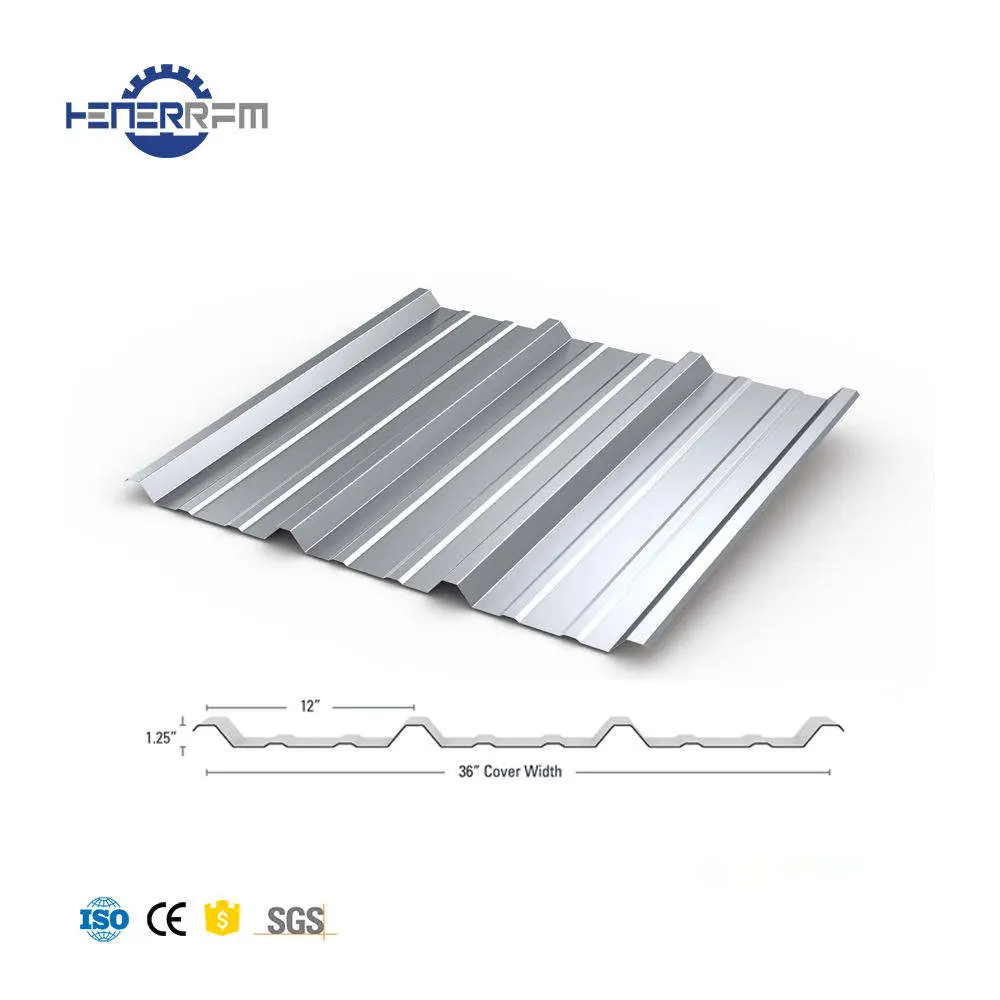
R Panel usually has longitudinal raised stiffeners and a relatively wide flat area. It generally uses exposed fasteners installation, i.e., the metal plate is fixed to the building support structure by passing the fasteners through the designated position of the plate.
Reinforced Ribs and Panel Profile
Reinforced ribs are among the most recognizable structural features of the R-panel. They define the primary cross-sectional shape of the panel and influence its structural performance. Furthermore, the dimensions and spacing of these ribs also affect the overall visual appearance of the finished roof or wall.
For manufacturers, maintaining consistency in the geometry of these ribs is crucial. Any variations in rib height, width, or placement can compromise the fit between adjacent panels and negatively impact the final installation.
Flat panel bottom and cover width
The flat area between reinforced ribs forms an important part of the surface of the plate. The width of the flat area will affect the cross-section design of the entire plate type and also affect the effective coverage width of finished plate.
Cover width is particularly important in project planning because it determines the amount of panels required to cover a given building area, and it also affects material usage calculation and installation layout.
Side joins and edge structures
Side joining areas are used to connect adjacent panels and are an important part of a metal roof installation system. Depending on the specific plate design, the edges of the plate may have different joining structures or forming details.
These structures should be specified in the original plate drawings, as they will directly affect the design of the forming rollers. Even if only minor changes are made to the edge geometry, adjustments to the molding order or the roller configuration may be required.
Therefore, the R Panel roll forming machine should be designed according to the confirmed sheet drawing, and not all production dimensions can be determined solely by the generic product name R Panel.
II. Why is R Panel design so important for metal construction projects?
Compatibility with building support structures
Metal roof panels are usually mounted on rails or other building supporting components. The panel cross section, the fastening position, and the arrangement of supporting structures need to be considered in a comprehensive manner during the project design phase.
For R Panel with exposed fastening, the location and installation details of the fastener shall follow the installation recommendations of the specific panel manufacturer and the structural requirements of the project.
Therefore, the plate design needs to be consistent with the intended installation system. If the strengthening position or the plate geometry changes, it may affect the strengthening location and the alignment of the plate with the support structure.
Roof and wall envelope applications
R Panel is used in a variety of metal construction projects, including commercial facilities, industrial buildings, storage facilities, agricultural buildings and some residential projects.
Although the same R Panel type may be used for both roofing and wall enclosure, the final product specification should be determined according to the specific application scenario.
For example, different projects may have different requirements in terms of material selection, surface coating, plate length, fastening method and installation details. Therefore, the manufacturer needs to fully understand the actual use of the plate before finalizing the design of the plate.
Panel size and installation efficiency
The width of sheeting cover and the length of production will affect the planning of the entire building envelope system.
When the dimensions of the panels are consistent, the construction crew can more efficiently schedule the amount of material, transportation, and installation work. In large construction projects, even a relatively small difference in size can increase on-site adjustment efforts.
Therefore, dimensional consistency is one of the factors that need to be taken into account when selecting the metal sheet production process.
III. Flexible production solutions for different R Panel production needs
Not all R Panel manufacturers serve the same market, and not all companies produce the same specifications.
Some factories mainly produce standard roof panels, while others need to supply products of different sizes, different material specifications, and different custom lengths.
This will place different requirements on the production equipment.
Different plate specifications
Although R Panel is a common name for a panel, the exact dimensions used by different manufacturers and markets are not necessarily the same.
Customers may have special requirements for reinforced ribs height, coverage width, side join structure or edge configuration. These details need to be confirmed before the device design is finalized.
For manufacturers who need to serve multiple customers, it is especially important to clarify whether the production plan is for one fixed plate type or supports multiple different plate specifications.
Different raw material requirements
The choice of raw materials affects both the final panel and the equipment design.
Steel grade, thickness, surface coating, and roll size all need to be evaluated in conjunction with the target plate type. This helps to determine whether the proposed equipment is suitable for the intended range of production.
At the same time, it cannot be assumed that a device designed to meet the specifications of a certain material will automatically achieve the same production results when all other materials are used.
Production length and order flexibility
Different construction projects do not have exactly the same sheeting length requirements. Some orders require relatively short panels, while others require longer panels to cover a larger area of a roof or wall.
Therefore, the production line planning should take into account the customer’s expected order structure, length measurement requirements, plate handling methods, and the available space of the plant.
The goal of the production programme is not just to pursue higher production speeds, but to establish a production process that can efficiently handle actual product types and order requirements.
IV. What R Panel roll forming solution can you trust?
To choose a reliable production plan, you cannot simply compare the price of the equipment or look at the appearance of the equipment.
Manufacturers need to assess whether the equipment supplier really understands the plate type requirements and has the capacity to translate these requirements into a viable production line.
Design of equipment based on plate drawing
Professional equipment design should begin with the customer’s actual R Panel drawings and raw material specifications.
This information provides a clear basis for rolling wheel development, equipment configuration and production planning, and reduces the understanding biases associated with communication based solely on generic product names.
Capacity for the manufacturing of rollers and mechanical components
The quality of the forming rollers and mechanical components is closely related to the performance of the equipment.
Manufacturers with their own processing capabilities can better coordinate the production of components such as rollers, molds and equipment racks. This capability is particularly important when projects need to be designed and processed for specific sheet types.
Plant testing before delivery
Before the equipment is shipped, factory inspections and test runs help to identify possible problems during the assembly, operation and forming of the equipment.
Where conditions permit, the customer can communicate with the manufacturer whether it is possible to carry out test production of samples and check the finished dimensions based on both-confirmed plate drawings.
This allows the customer to have a clearer picture of the actual production status of the equipment before it is delivered.
Installation and Technical Support
For overseas buyers, equipment delivery is only one part of the project. Transportation, installation, commissioning, and operator training also affect the speed at which new production lines can be put into service.
Therefore, knowing what technical support the manufacturer can provide and how to communicate during the installation and subsequent operation of the equipment is an important consideration during the procurement process.
V. HENER ‘s resolution of the R Panel production project
Each R Panel production project has its own product requirements, material specifications and production objectives. The appropriate equipment scheme should be based on these practical conditions rather than simply adopting a fixed configuration applicable to all customers.
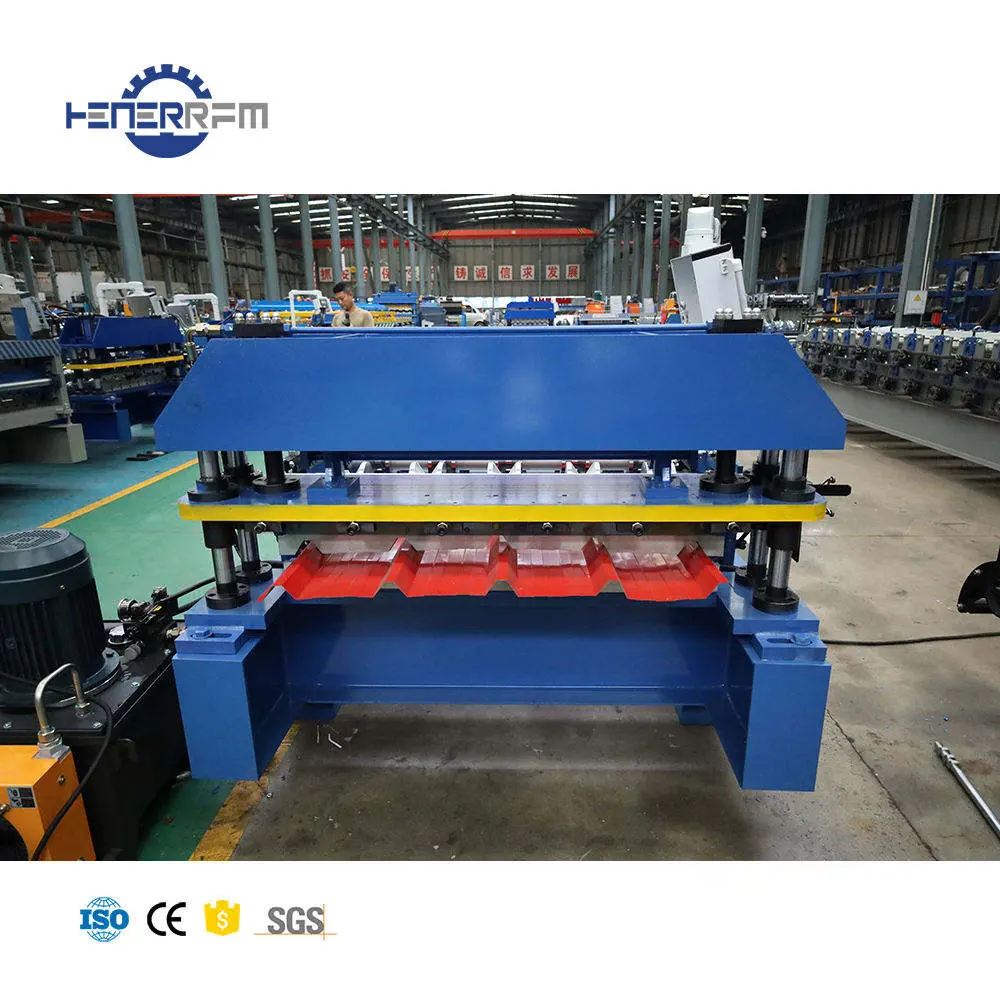
As a manufacturer of roll forming machine, HENER Machinery specializes in the development of equipment solutions for different metal forming applications. For R Panel projects, the initial communication can start with the sheet drawings, material information and expected production requirements provided by the customer.
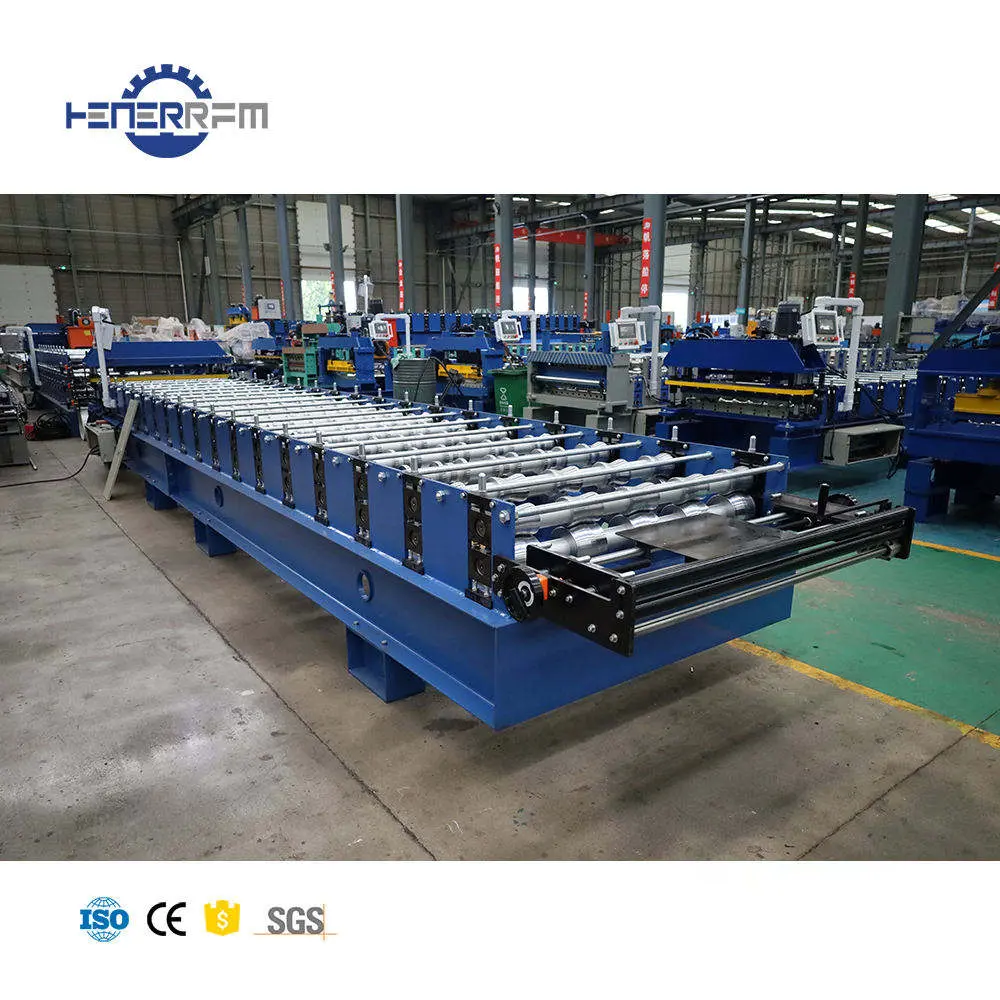
HENER has its own machining workshop for the manufacture of important mechanical components such as rollers, molds and equipment racks. This manufacturing capability helps to coordinate parts processing and assembly processes.
Before the equipment is delivered, factory inspections and equipment testing help to confirm the operational status of the equipment. For overseas customers, HENER can also provide installation guidance, commissioning support and operator training according to project requirements.
With more than 15 years of industry experience in roller forming equipment and export experience covering more than 100 countries and regions, HENER continues to provide equipment solutions for customers with different markets and production needs.
For buyers planning to enter the metal roof panel market or wanting to expand their existing product range, providing accurate R Panel drawings at the beginning of the project is an important step in developing a suitable equipment proposal.
Conclusion
The production of R Panel begins with a clear sheet design, and the successful manufacturing process depends on how this design is translated into a stable forming process.
The geometry of reinforcing rods, planar foundations, and side joining structures will affect the design of the rollers and the forming order. Material characteristics, bounce phenomenon, surface protection and cut accuracy will also further affect the quality of the final sheet.
Therefore, the selection of the right R Panel roll forming machine needs to be comprehensively considered from two aspects of production design and actual manufacturing requirements.
Before the equipment is designed, clarity on plate drawings, raw material specifications and production goals helps manufacturers develop more suitable production plans and improve consistency of metal roof panel products.
Frequently Asked Questions
1. What is the difference between R Panel and other metal roof panel types?
R Panel is usually characterized by longitudinal raised stiffeners, a wide flat plate bottom and an exposed fastening installation design. Its specific size and edge structure will vary depending on the product specifications and the manufacturer’s design.
2. Why is panel drawing so important when ordering an R Panel roll forming machine?
The plate drawings specify important dimensions such as strengthening height, strengthening spacing, plate coverage width and side joining structure. This information is an important basis for the design of the forming rollers and the formulation of the production process sequence.
3. Can the R Panel roll forming machine produce sheets of different sizes?
This depends on the equipment design and predetermined production range. Panels of different lengths can often be controlled by measuring and cutting systems, while panels of different cross sectional structures may require replacement of forming molds or adjustment of equipment configuration.
4. What factors can cause sheet deformation during R Panel production?
Possible causes include improper roller design, inaccurate equipment matching, inconsistent material characteristics, inappropriate forming conditions, and excessive deformation at some forming stages. These problems can be helped to be identified and resolved through test production and dimensional testing.
5. What information does the purchaser need to prepare before ordering the R Panel roll forming machine?
The purchaser shall prepare drawings of the target R Panel sheet type, material type, material thickness, coil size, required sheet length and expected production requirements. This information helps equipment manufacturers evaluate suitable equipment design options.