×


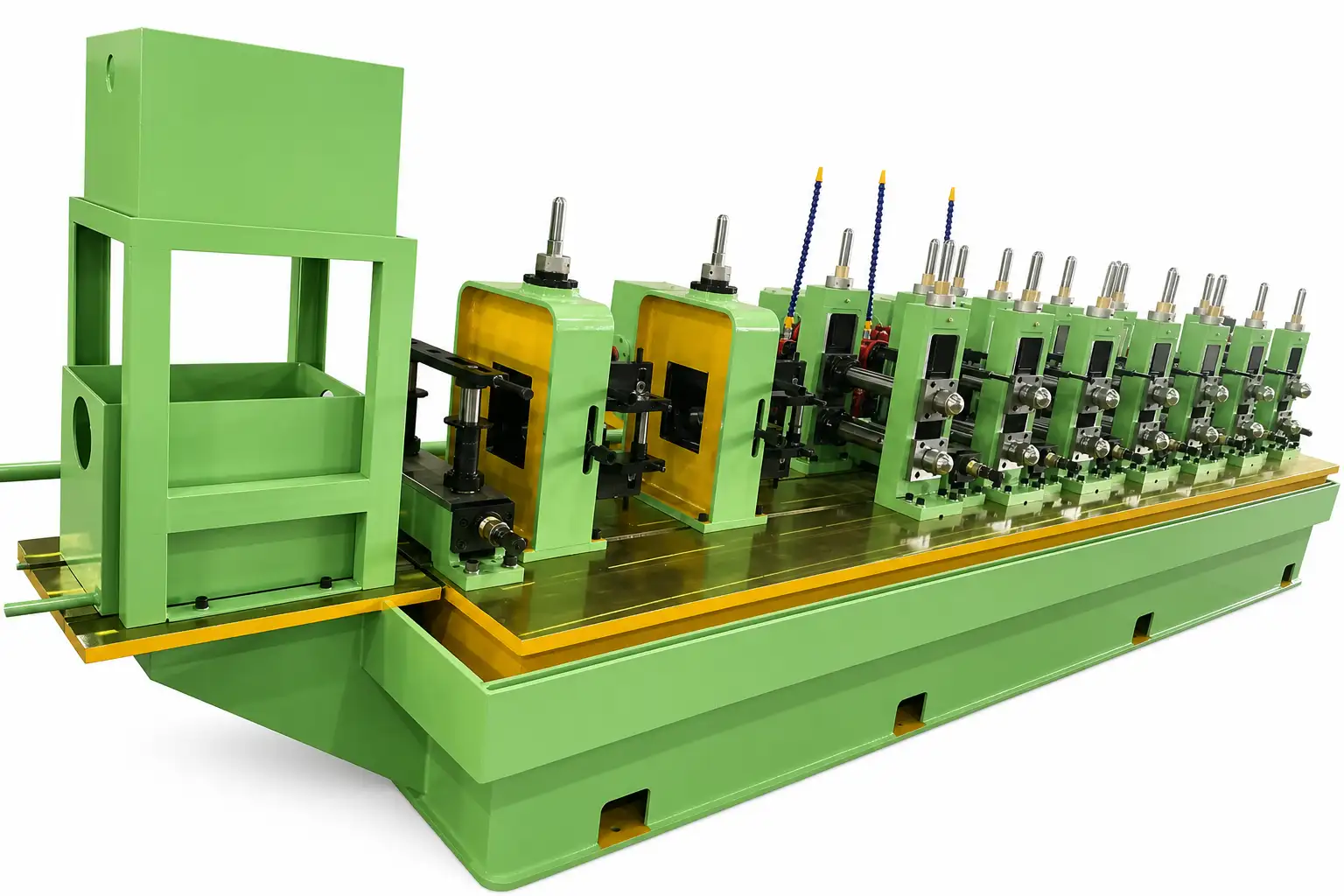
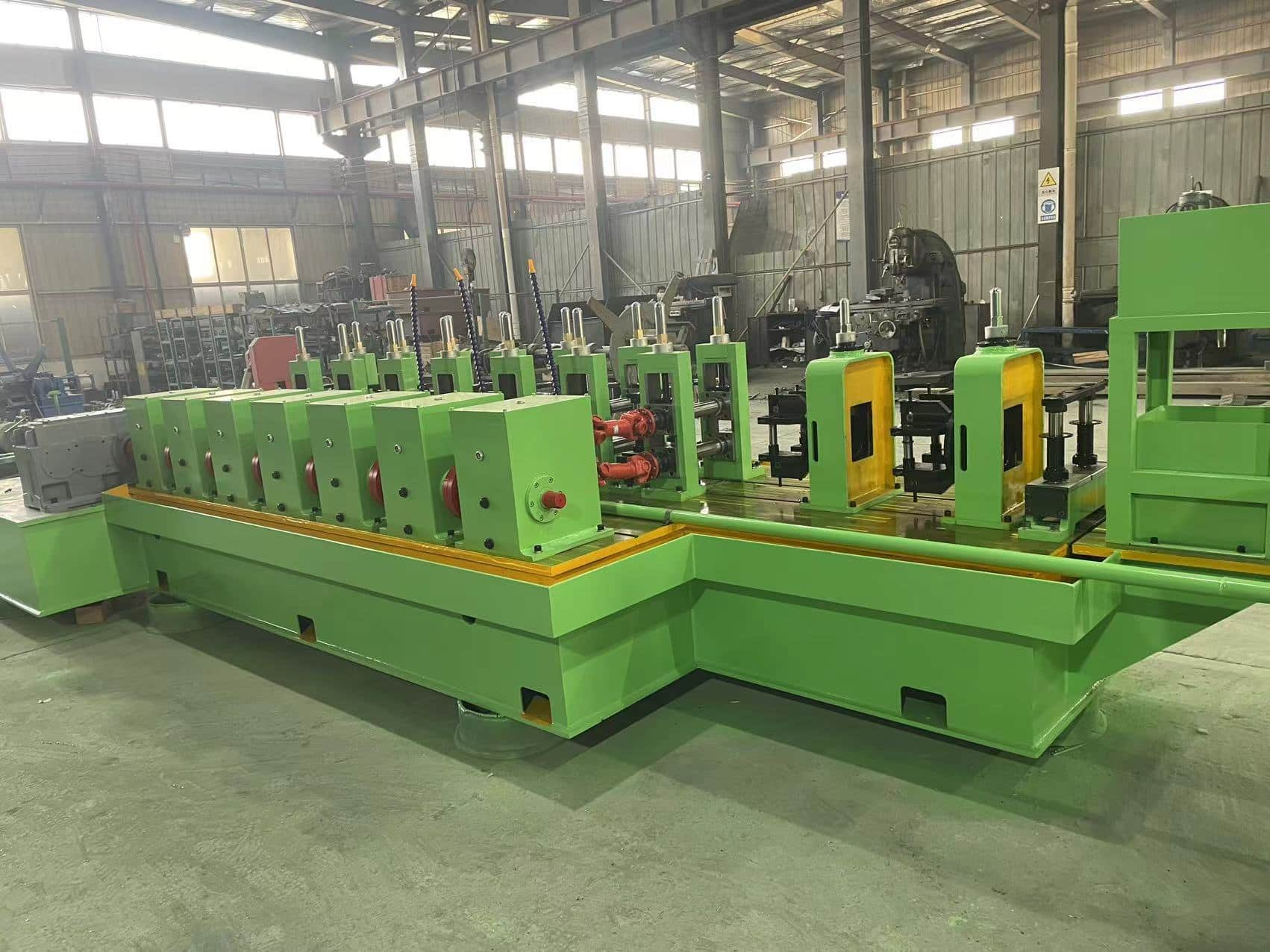
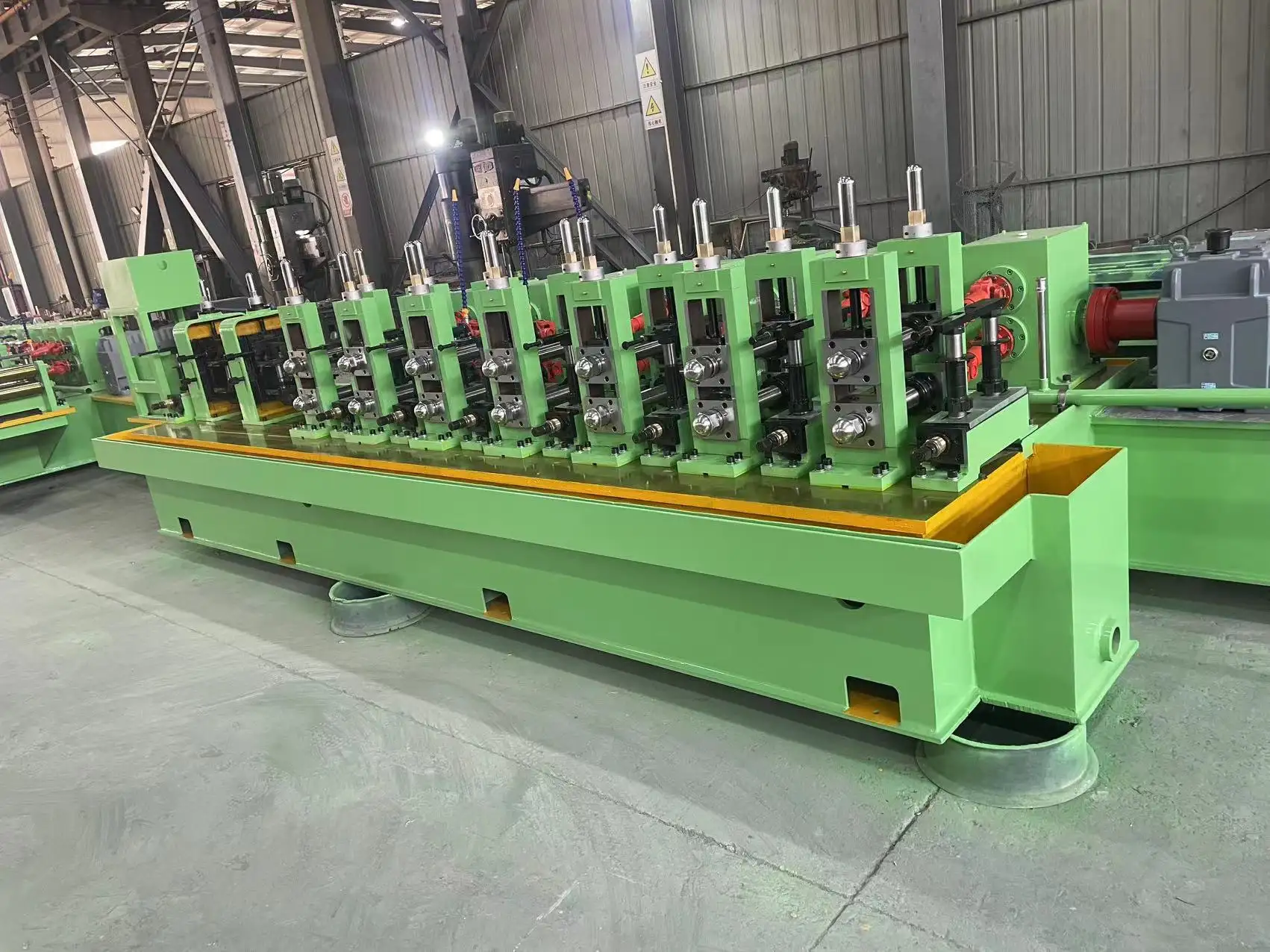
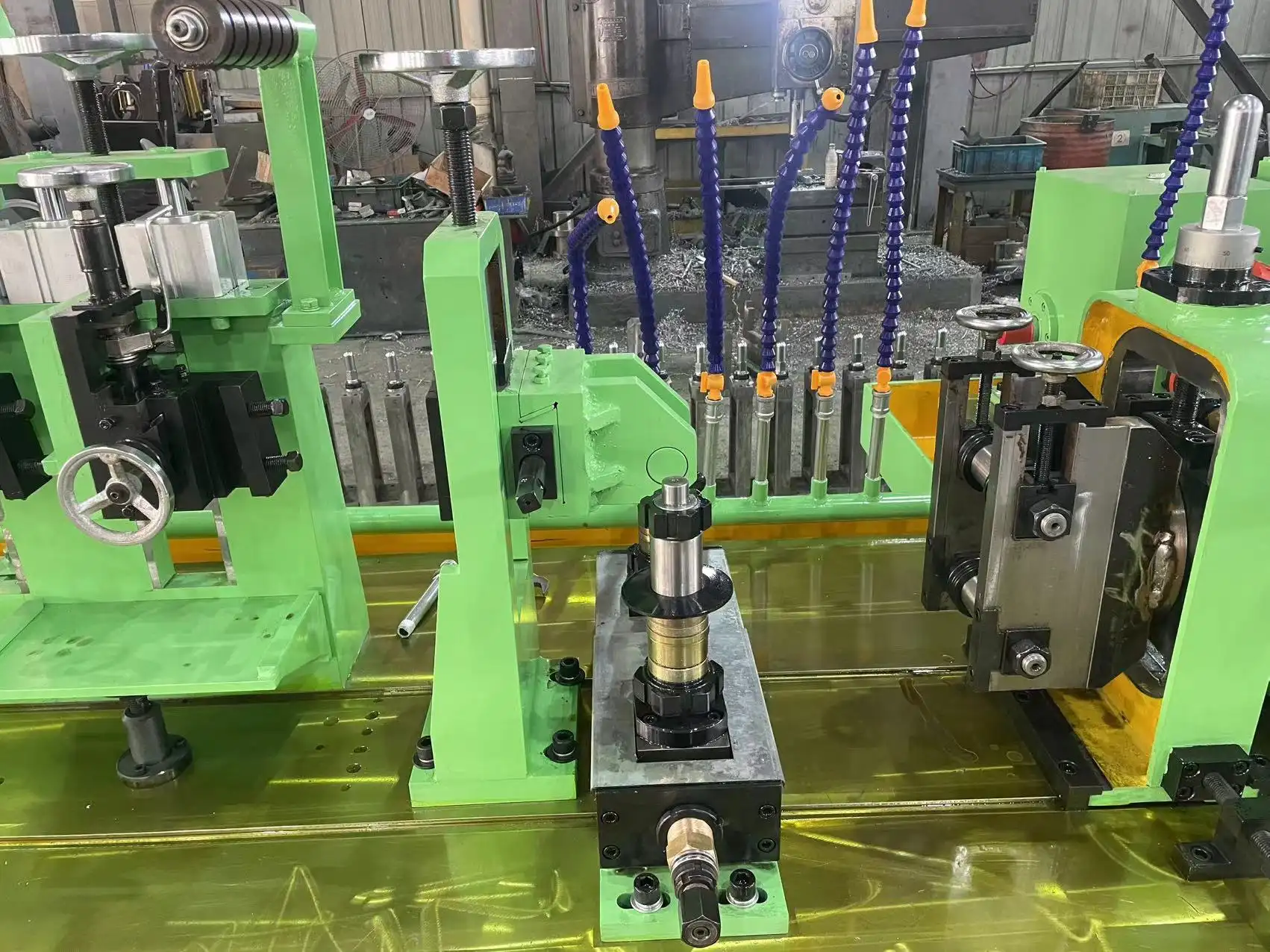
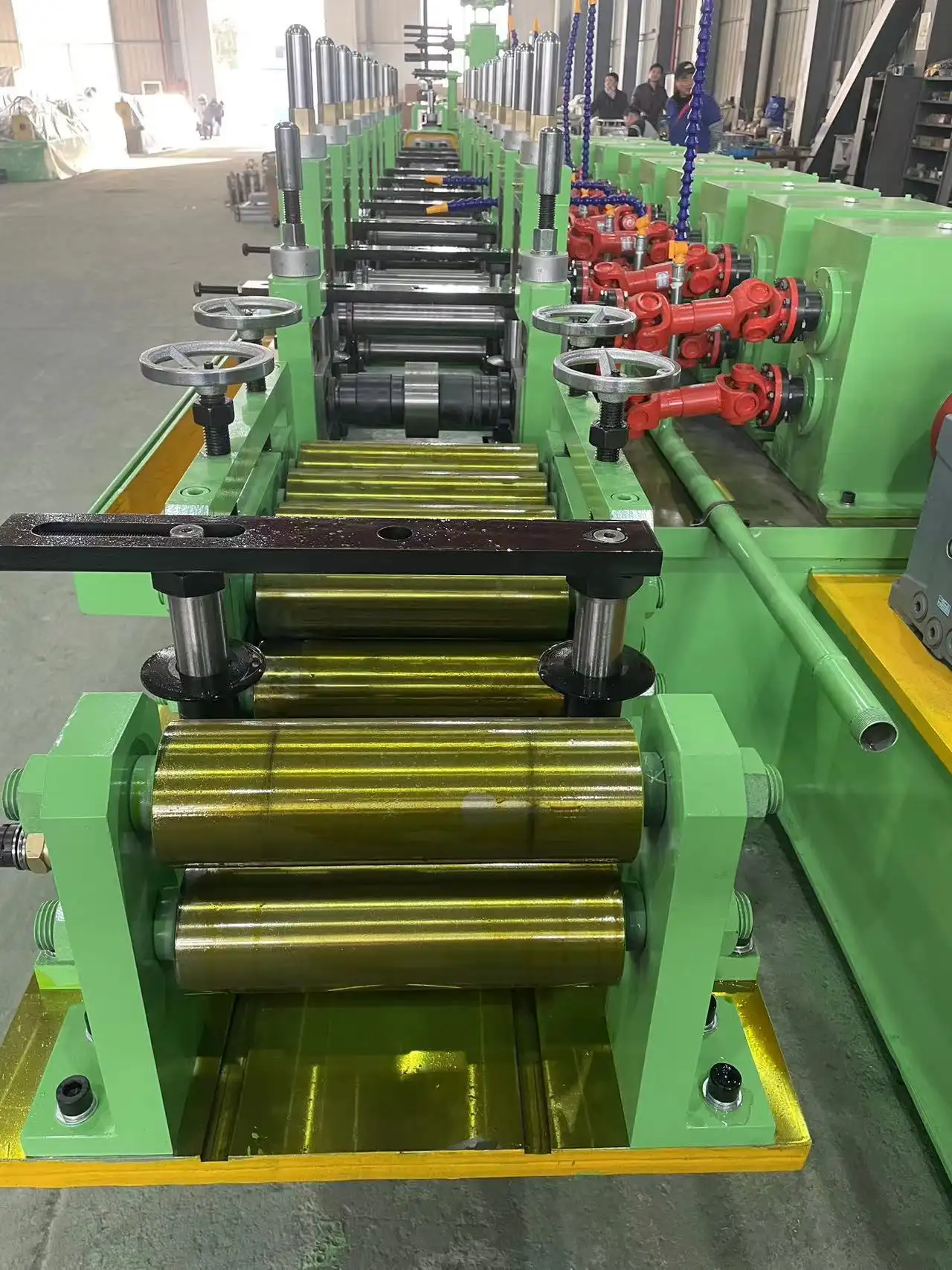








A high frequency welding pipe machine is a continuous production device that uses high-frequency current to heat the edges of metal strips, then fuses them into pipes through extrusion rollers. It is widely used in the metal welded pipe manufacturing industry.
During the production process, the metal steel strip is gradually bent by multiple sets of precision forming rollers to form a tubular structure with longitudinal open seams. Subsequently, the high frequency welding pipe machine rapidly heats the seam edges and completes the welding through extrusion rollers. After subsequent cooling, sizing, and cutting, welded steel pipes that meet the target size requirements are finally obtained.
Compared to decentralized processing methods, high frequency welding pipe machine can integrate the forming and welding processes into a continuous operation. This helps improve production efficiency, maintain product dimensional consistency, and meet the mass production requirements for various specifications of welded pipes.
Depending on the specific model and roller configuration, the High Frequency Pipe Welding Machine can be used to produce round tubes, square tubes, rectangular tubes, and some irregularly shaped tubes. The equipment is widely applicable in furniture manufacturing, architectural structures, storage shelves, machining, and general metal products industries.
| Raw Material | Steel Coil GI PPGI |
| Raw Material Thickness | 0.4-10 mm |
| Tube Range | 6-325 mm |
| Pipeline Shape | Round/Square/Rectangular |
| Production Capacity | 1-15 m/min |
| Motor motor | 90 kW |
| High frequency power | 100 kW |
| Voltage | 380 V/410 V/415 V |
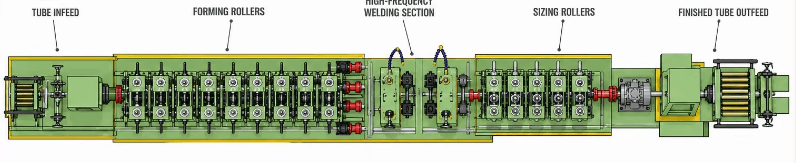
Step 1: Coil loading and unwinding
The steel roll is installed on the roll forming machine and the steel belt is smoothly delivered into the production line through an orientation device. The carrying capacity of the roll crusher, the inner and outer diameter of the steel roll need to be matched to the raw material specifications.
Step 2: Steel strip cutting and welding
When the last steel belt is about to end, the front and end of the front steel belts can be connected by cutting and welding devices. This process helps to reduce the production disruption caused by roll changes, and the specific continuous production capacity depends on the configuration of the high frequency welding pipe machine.
Step 3: Steel belt storage and feeding
The storage device is used to temporarily store steel belts of a certain length and provide relatively stable loading conditions for subsequent continuous forming and welding. The storage mode and capacity shall be designed according to the target line speed and the roll rotation cadence.
Step 4: Roll forming
The steel belt passes through a multi-component roller in sequence and gradually bends into a relatively tubular structure at the edges of the joint. A stable molding process and accurate edge alignment are important foundations for obtaining reliable welds.
Step 5: High frequency welding
The high frequency welding pipe machine causes the edges of the pipe joint to heat up rapidly, and the edges are pressed by a squeegee to form a vertical welding. Welding power, speed and other process parameters need to be adjusted according to the material and the wall thickness of the tube.
Step 6: Weld deburring and cooling
Depending on the finished product requirements, an inner weld or outer weld removal device may be configured to treat the residue formed after welding. The pipes then enter the cooling area to provide suitable process conditions for subsequent sizing and sizing adjustments.
Step 7: Sizing and straightening
After the calibration of the roller group, the cross-section size and shape of the tube are further adjusted. According to the product requirements, a corresponding straightening device can also be configured to meet subsequent use and machining needs.
Step 8: Fixed length cutting and finished product collection
The cutting system cuts continuous pipes according to the set length. The finished product then goes to the loading table or collection area, where it is sorted, packed and stored after necessary sizing checks.
The high frequency welding pipe machine can achieve a more concentrated heat input by focusing the laser beam to the seam area. For process-compliant metal pipes, this approach helps control weld morphology and thermal impact areas, and is suitable for production scenarios that require weld quality and product consistency.
The high frequency welding pipe machine connects steel band forming with the longitudinal welding process, enabling the pipe to be processed along a continuous production path. Combined with suitable loading, forming and cutting configurations, it reduces duplication of movement between processes and helps companies optimize production organization.
By rationally designing the forming rollers, sizing units and related assembly, the high frequency welding pipe machine can be configured for different tube specifications. The production capacity of round, square, rectangular and other types of pipes depends on the line structure, mold design and specific machine type, and is suitable for customized evaluation based on the target product series.
Welding quality depends not only on the laser system, but also on the edge state of the steel belt, forming stability, seam alignment, and cooling and sizing after welding. Designing these links as a complete production line helps to control the size of the finished product and the consistency of the weld.
Depending on capacity, manual configuration and plant layout, suitable feeding, steel belt connection, online testing, fixed length cutting and finished collection schemes can be chosen. The degree of automation should be consistent with the target pipe specifications, production pace and budget, rather than pursuing a certain configuration alone.
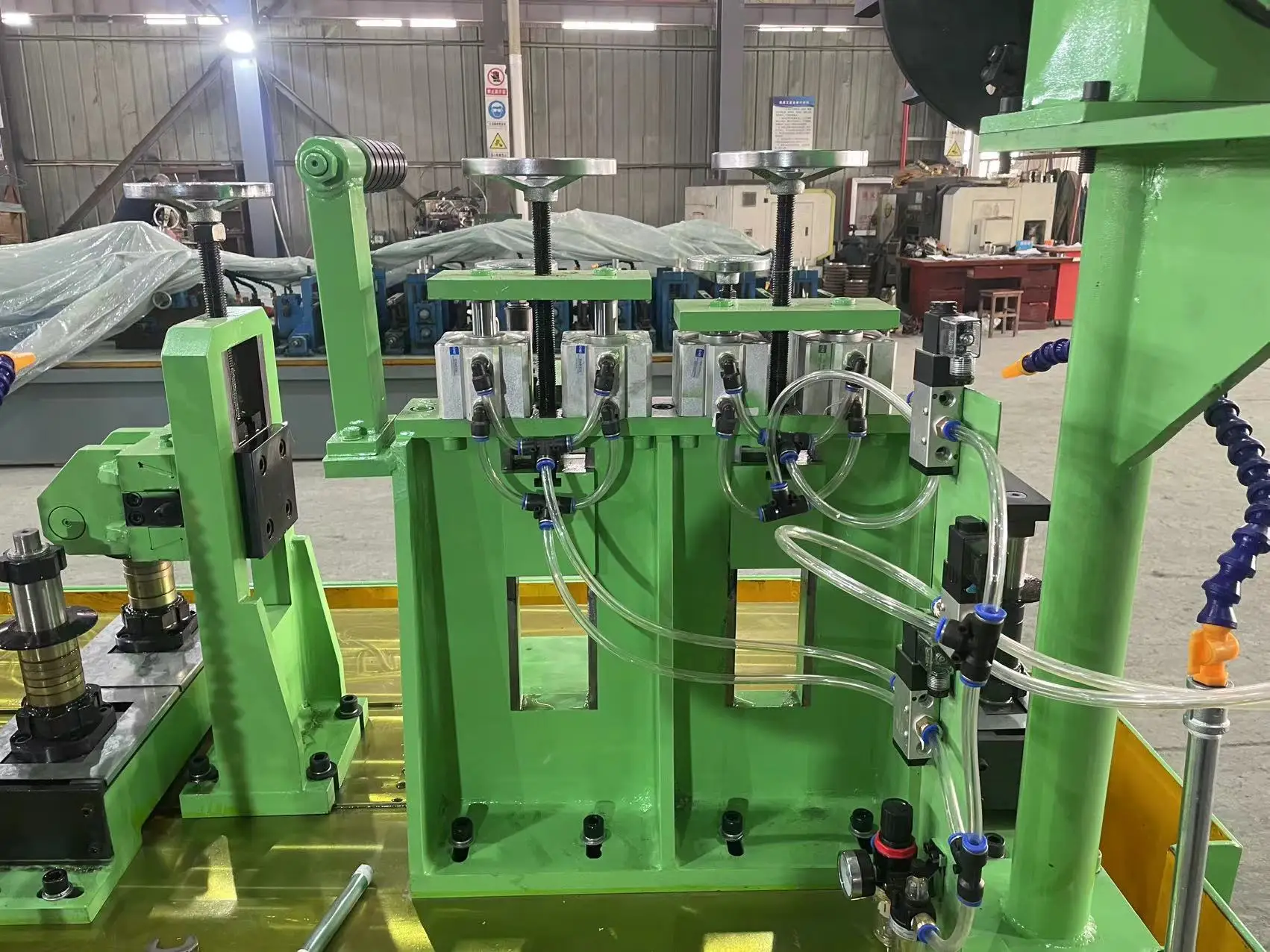
Metal furniture manufacturing
It is used in the production of table and chair frames, bed racks, shelves, display racks and other metal furniture pipes. The specific tubing dimensions, surface quality and weld requirements should be determined according to the product design.
Construction & Steel Structure Industry
It is suitable for the production of parts of building structural pipes, guard rails pipes, support pipes and other metal structural components. The equipment configuration needs to match the strength, size and usage requirements of the target pipe.
Industrial Equipment and Machinery Manufacturing
It can be used in the manufacture of mechanical equipment frames, supporting components, metal joints and other suitable pipes to provide pipe for subsequent cutting, welding and assembly processes.
Automotive and parts manufacturing
Used in the production of some automotive-related metal pipes and structural parts. Products involving safety performance or specific industry standards need to develop a process plan based on the quality of the material, the quality of welds and the inspection requirements.
Storage and commercial display systems
Metal pipe production is used for some storage racks, shelves and display systems, helping pipe manufacturers organize continuous processing according to product line.
General metal pipe processing
For other metal pipes requiring continuous forming and vertical welding, the suitability of laser welding line can be assessed based on material characteristics, product dimensions and target capacity.